
A reliable drinking-water supply begins with continuous and accurate source-water monitoring. For reservoirs, lakes, and other open-water sources, periodic manual sampling may not provide enough data to identify sudden changes in water quality.
At a key water source in Huzhou, Zhejiang, an intelligent water quality monitoring buoy system was deployed to replace labor-intensive patrols with continuous, automated monitoring. By combining multiparameter spectral sensors, solar power, wireless communication, and a cloud-based monitoring platform, the project created a 24/7 early-warning network for drinking-water source protection.
Project Background
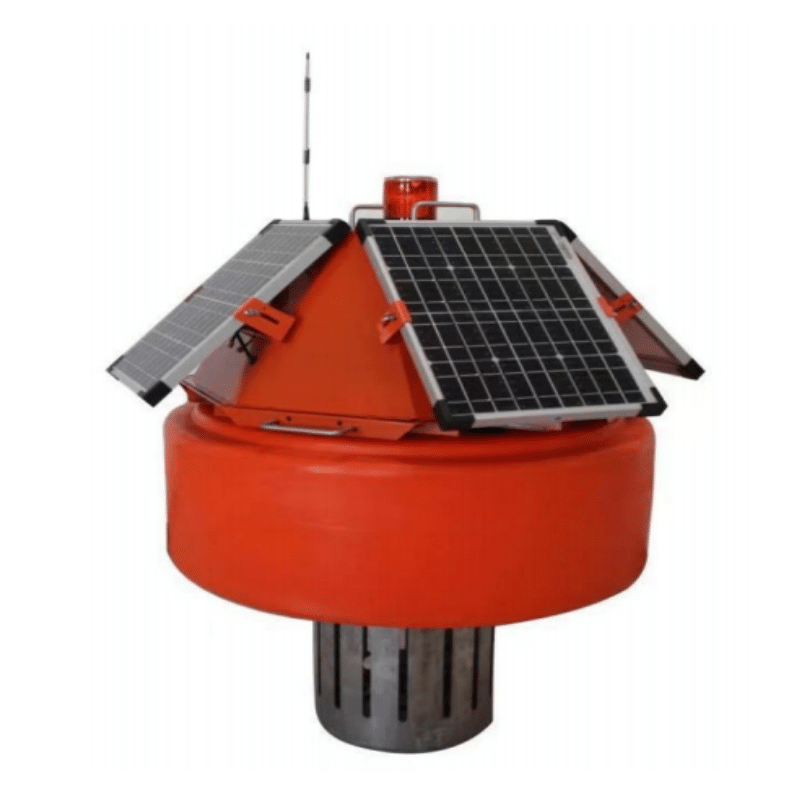
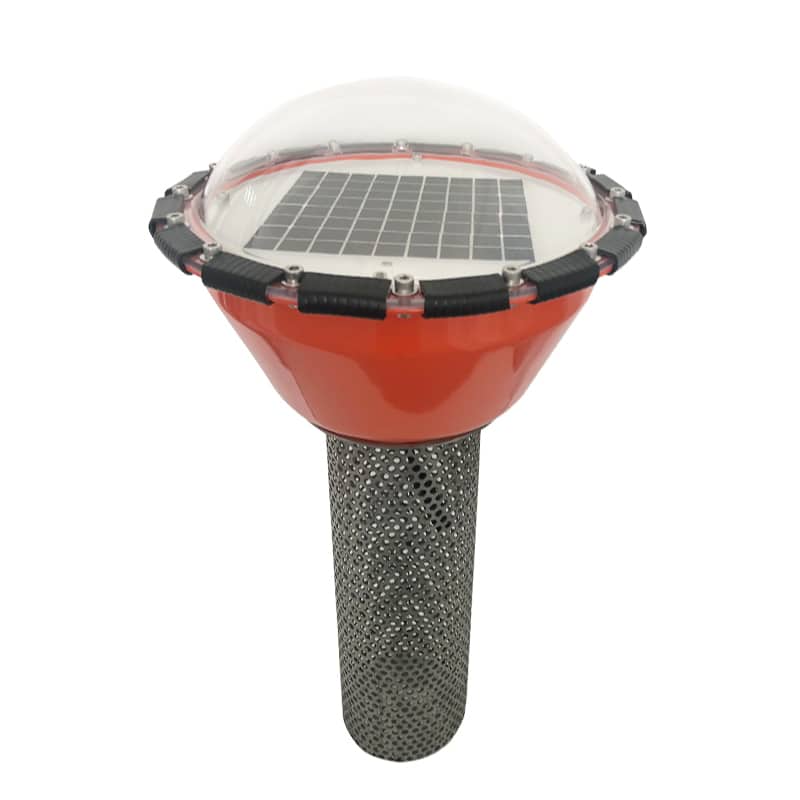
Intelligent buoy monitoring stations were installed at selected locations across the water source. Each station integrated water quality sensors, a power supply system, wireless communication equipment, and a remote data platform.
The system was designed around three main functions:
Continuous Multiparameter Monitoring
The buoy stations were equipped with UV-Vis spectral and multiparameter water quality sensors.
Depending on the monitoring requirements, the system could track indicators including:
- Chemical oxygen demand
- Permanganate index
- Total organic carbon
- Chlorophyll
- Turbidity
- Dissolved oxygen
Measurements were collected automatically and transmitted at five-minute intervals.
This high-frequency monitoring created a much more complete picture of water-quality conditions than daily or weekly manual sampling. Operators could observe gradual trends as well as sudden changes that might indicate pollution, excessive algae growth, or other environmental disturbances.
Solar-Powered Unattended Operation
A monitoring buoy must remain operational in an environment where grid electricity and wired communication are usually unavailable.
To support long-term field operation, the stations used solar power together with 4G or 5G wireless data transmission. The solar power system supplied energy to the sensors, data-acquisition equipment, and communication module.
This configuration reduced the need for routine visits and enabled the stations to operate continuously throughout the year.
By eliminating frequent manual sampling trips, the project also reduced the risks and logistical difficulties associated with sending personnel onto the water during poor weather or other unfavorable conditions.
Cloud-Based Water Quality Management
Monitoring data from each buoy was uploaded to a cloud platform in real time.
Through the platform, water-resource managers could:
- View current measurements remotely
- Compare data from different monitoring locations
- Review historical trends
- Identify abnormal changes
- Receive alarm notifications
- Support operational and emergency-response decisions
The platform also established a baseline based on normal water-quality conditions. When measurements deviated significantly from this baseline, the system generated multilevel warning events.
For example, a rapid increase in chlorophyll or related spectral indicators could suggest developing algal activity. Instead of waiting for visible changes or laboratory confirmation, management personnel could receive notifications through mobile applications or SMS and begin further investigation.
This changed the monitoring strategy from post-event investigation to proactive early warning.
How the System Works
The monitoring process can be summarized in five steps:
- Water quality sensors measure the water continuously.
Spectral and electrochemical sensors collect information on organic pollution, algae-related indicators, turbidity, dissolved oxygen, and other parameters.
- The buoy’s data-acquisition unit processes the sensor signals.
Measurements are organized and prepared for transmission.
- The solar power system supports unattended operation.
Solar panels and the integrated power system keep the monitoring equipment operating in remote locations.
- 4G or 5G communication sends data to the cloud platform.
Measurements are transmitted automatically at five-minute intervals.
- The platform analyzes trends and issues alerts.
Abnormal data can trigger notifications, allowing operators to investigate and respond quickly.
Project Results
The project upgraded water-quality monitoring from daily or weekly sampling to continuous, minute-level monitoring. It also provided earlier warnings of potential algal activity, giving operators more time to respond.
At the same time, automated monitoring reduced manual inspection and sampling costs by more than 80%, improving overall management efficiency.
On-Site Photos


Practical Considerations for Similar Projects
A successful buoy monitoring project requires more than selecting a group of sensors. The complete system should be designed around the environmental conditions and monitoring objectives.
Important factors include:
- Target water-quality parameters
- Expected concentration ranges
- Sensor cleaning and calibration requirements
- Biofouling conditions
- Monitoring depth
- Solar exposure and power consumption
- Wireless network coverage
- Data-reporting frequency
- Alarm thresholds
- Buoy stability and mooring conditions
- Routine maintenance intervals
For critical drinking-water applications, online measurements should also be supported by appropriate quality-control procedures and periodic laboratory verification.
Conclusion
The Huzhou water-source project demonstrates how intelligent monitoring buoys can improve the protection of lakes and reservoirs used for public water supply.
By integrating multiparameter sensors, solar power, wireless communication, cloud-based data management, and automatic alarms, the system transformed a manual monitoring process into a continuous early-warning network.
The project achieved minute-level data collection, reduced routine inspection requirements, improved operational visibility, and provided valuable advance warning of potential algal activity.
For water utilities and environmental organizations, this type of system offers a practical path from reactive water-quality management to continuous, data-driven source-water protection.
Planning a lake, reservoir, river, or drinking-water intake monitoring project? Contact APURE with your target parameters, monitoring locations, communication requirements, and site conditions to discuss a suitable water quality monitoring solution.