
Offshore aquaculture creates a different monitoring challenge from conventional ponds and land-based tanks.
Sensors operate continuously in saline water, biological fouling can affect probe surfaces, and frequent manual inspection becomes difficult once aquaculture moves farther offshore.
For a large offshore aquaculture vessel, a digital monitoring system was deployed to provide continuous water quality data for the onboard farming environment.
The project follows one main monitoring chain:
Offshore Aquaculture → Self-Cleaning Sensors → Continuous Monitoring → Remote Platform → Offshore Aquaculture Safety

Offshore Aquaculture Requires More Than Periodic Testing
For marine aquaculture, a short-term change in dissolved oxygen or other water parameters can affect a large volume of cultured fish.
On an offshore vessel, however, conventional manual sampling is difficult to perform continuously. The monitoring equipment must also withstand salinity, biofouling and long-term immersion.
The project therefore required an online system capable of continuously monitoring key parameters including:
Dissolved Oxygen + pH + Temperature + Ammonia Nitrogen + Turbidity
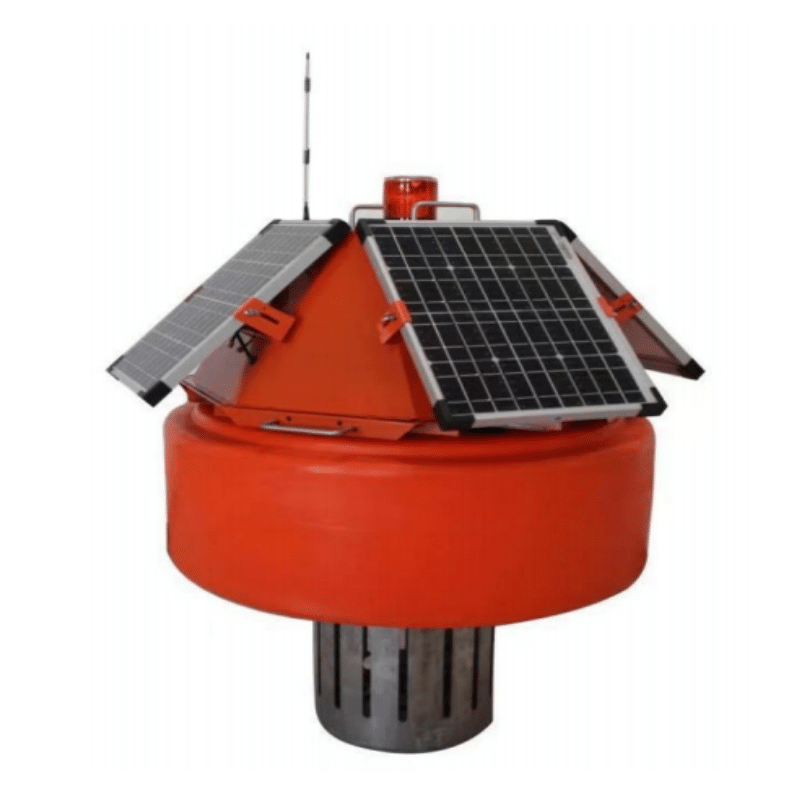
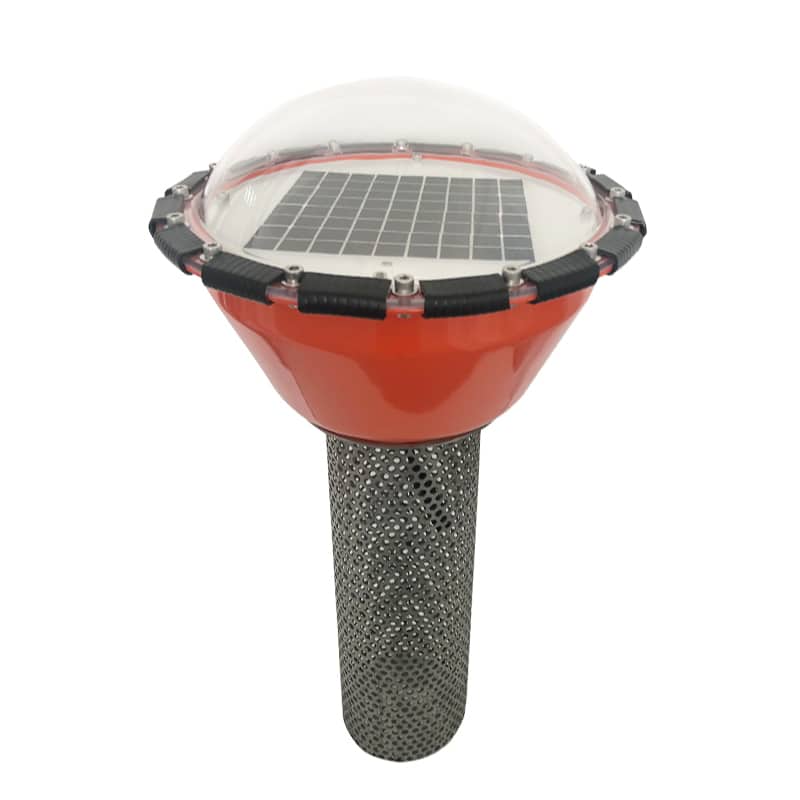
Instead of waiting for operators to take samples, these parameters provide continuous information on the condition of the aquaculture water.
Self-Cleaning Sensors for Long-Term Marine Monitoring
The key technical feature of this project is the use of digital self-cleaning water quality sensors.
In marine environments, algae, shellfish and other biological material can gradually accumulate on sensor surfaces. This can increase maintenance requirements and affect long-term measurement reliability.
The deployed sensors use an automatic cleaning mechanism to periodically clean the sensing surface, helping reduce biological fouling during long-term operation.
This changes the monitoring approach from:
Manual Sampling → Cleaning → Measurement
to
In-Situ Sensor → Automatic Cleaning → Continuous Measurement
For an offshore aquaculture vessel where routine probe access is more difficult, reducing manual sensor maintenance is an important part of the system design.

Continuous Data to the Central Monitoring Platform
The sensors operate as digital monitoring nodes around the aquaculture system.
Measurement data is transmitted through digital communication to the vessel’s central monitoring system, allowing operators to observe water conditions continuously rather than relying on isolated sampling results.
The data chain becomes:
Aquaculture Water → Sensors → Digital Signal → Central Monitoring Platform
Continuous data also makes abnormal trends easier to identify. Operators can use changes in dissolved oxygen and other monitored parameters as a basis for faster operational response.
For remote marine farming, this is particularly important because the monitoring system must provide useful information without depending on continuous manual inspection.
From Monitoring to Offshore Aquaculture Control
The project goes beyond displaying sensor readings.
Water quality information can be integrated with operating systems such as aeration, feeding and water treatment, creating a data-driven control structure for the aquaculture vessel.
For example:
Water Quality Change → Detection → System Response → Operating Adjustment
This allows water quality measurements to support decisions on aeration and other aquaculture operations rather than remaining isolated instrument data.
The project records report that the system reduced dependence on manual inspection and supported more precise feeding and energy-management decisions.
A Monitoring Architecture for Smart Marine Farming
The complete project can be summarized as:
Offshore Aquaculture
↓
DO + pH + Temperature + Ammonia Nitrogen + Turbidity
↓
Self-Cleaning Digital Sensors
↓
24/7 Continuous Monitoring
↓
Central Monitoring Platform
↓
Aeration / Feeding / Water Treatment Support
↓
Offshore Aquaculture Safety
The main value of offshore aquaculture water quality monitoring is therefore not simply moving conventional sensors from a pond onto a vessel.
The monitoring system must be designed around the marine environment: long-term immersion, biofouling resistance, reduced maintenance, continuous digital data and integration with aquaculture operations.
This architecture can also provide a reference for offshore fish farms, marine cages and other remote aquaculture facilities where continuous on-site inspection is difficult.
Planning an Offshore Aquaculture Monitoring Project?
Planning an Offshore Aquaculture Monitoring Project?
APURE can help configure water quality sensors, self-cleaning systems, monitoring points and digital communication for marine aquaculture applications.
Request a Quotation
Send the required parameters, monitoring points, aquaculture system type, project location and communication requirements.
Request a QuotationSend Aquaculture Water Data for Design
Provide available DO, pH, temperature, ammonia nitrogen and turbidity ranges together with operating and installation conditions.
View Multiparameter Monitoring →Contact for Engineering Solution
Discuss self-cleaning sensors, marine deployment, digital communication and integration with aquaculture control systems.
Contact APURE Engineering →