
See how online school drinking water monitoring combines pH, residual chlorine and turbidity sensors with real-time data and automatic alarms.
School Drinking Water Monitoring for Campus Safety
School drinking water systems require more than periodic sampling. When testing is performed only every few days, short-term changes in residual chlorine, turbidity or pH may not be detected when they occur.
At a school in Nanchang, a compact school drinking water monitoring system was installed to create a continuous monitoring chain from campus water entry points to facility management:
Campus Water Inlet → Online Monitoring → Real-Time Data → Alarm → Campus Management → Drinking Water Safety
The project serves a campus with daily drinking-water demand covering more than 2,000 users.

From Campus Water Inlet to Online Monitoring
Before the upgrade, water quality management depended mainly on scheduled manual sampling every 2–3 days. This made it difficult to capture short-term water quality changes and required staff to investigate problems after they occurred.
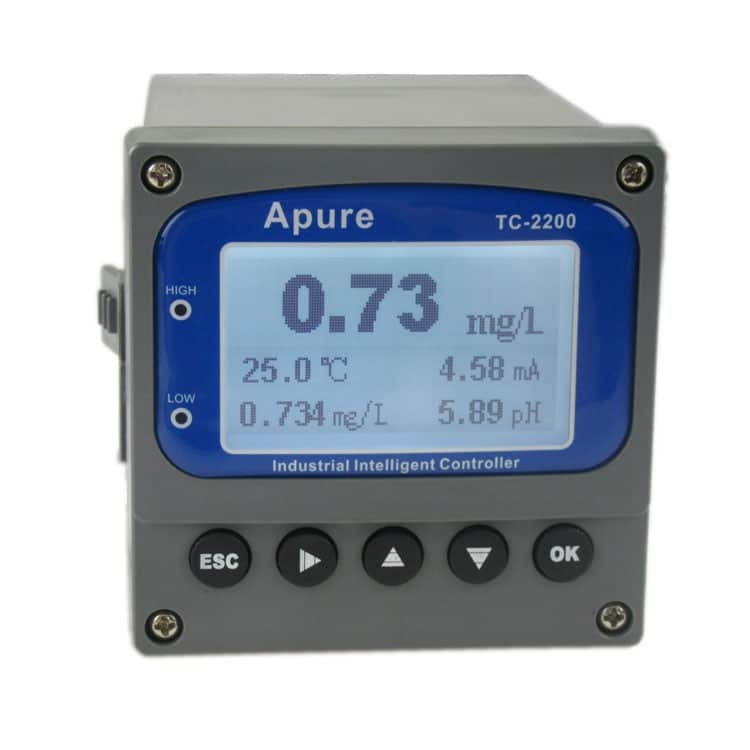
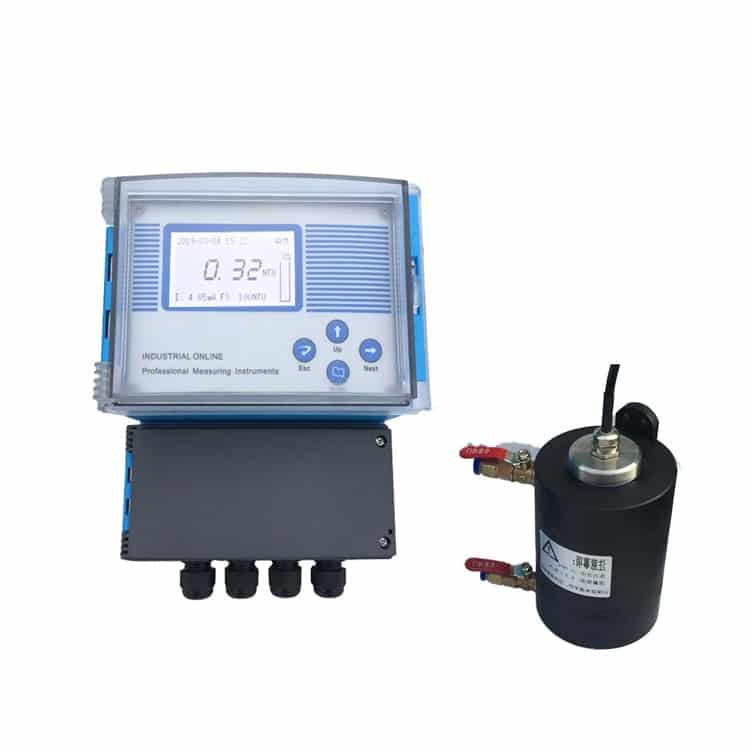
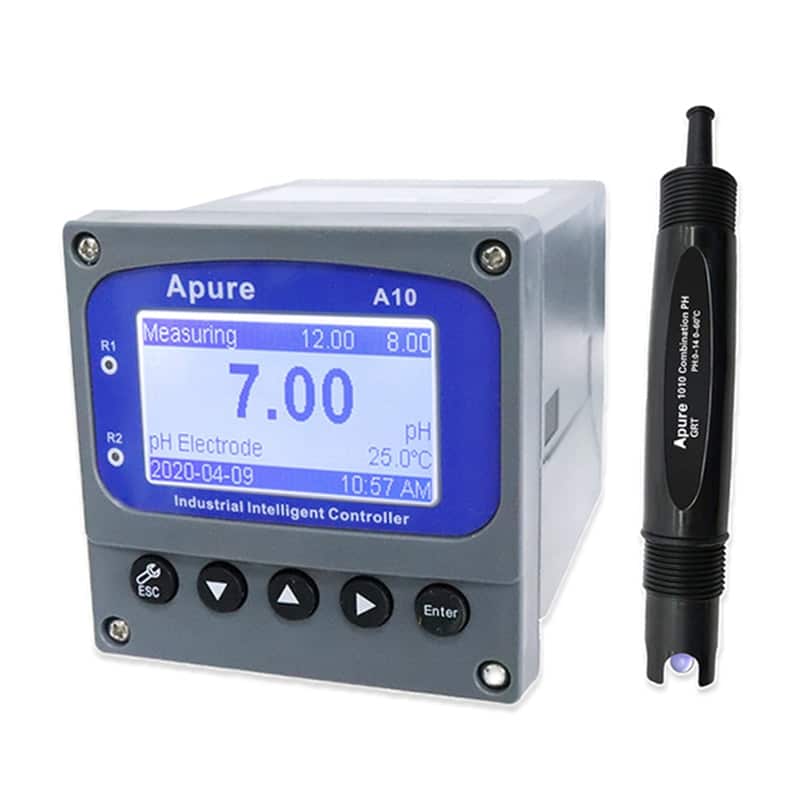
The project installed compact modular sensors at critical locations such as drinking-water units and storage tanks. Continuous monitoring focused on three key indicators:
Residual chlorine + Turbidity + pH
This configuration gives operators ongoing information about disinfection conditions, particle-related changes and general water chemistry without requiring a large monitoring station.
The modular design also suited the school’s limited installation space. Automatic cleaning reduced routine maintenance, with project records indicating maintenance was required approximately once per month.
Real-Time Data Instead of Delayed Sampling
Sensor readings were transmitted to a cloud monitoring platform, allowing facility staff to check water quality remotely instead of waiting for the next sampling round.
The operating chain became:
Online Sensors → Real-Time Data Acquisition → Cloud Platform → Automatic Alarm
When a monitored parameter exceeded the configured threshold, the system could send notifications to responsible personnel. For example, the project configured an alarm when residual chlorine dropped below its project-defined limit, enabling staff to investigate the condition quickly.
This changed water quality management from periodic inspection and delayed response to continuous monitoring and event-based response.
APURE monitoring architectures can integrate field instruments with remote data transmission and centralized monitoring for water-treatment applications.
From Alarm to Campus Water Management
The main value of the system is not simply displaying water quality readings. It gives school facility managers a faster way to identify abnormal conditions and organize maintenance.
According to the project records, the system replaced much of the previous twice-weekly manual sampling workload, reducing related labor costs by approximately 80%. Drinking-water satisfaction was reported to increase to 98%, with no drinking-water safety incident recorded during system operation.
For international projects, monitoring parameters, alarm thresholds and compliance requirements should always be configured according to the applicable local drinking-water regulations.
The broader monitoring approach is consistent with WHO drinking-water guidance, which recommends preventive risk management and monitoring throughout the water supply chain rather than relying only on final testing.
A Practical School Drinking Water Monitoring Chain
The project can be summarized in one simple architecture:
Campus Water Inlet
↓
pH + Residual Chlorine + Turbidity Monitoring
↓
Real-Time Data Acquisition
↓
Automatic Alarm
↓
Campus Facility Management
↓
Drinking Water Safety
For schools, universities and other public facilities, the objective is not to install unnecessary instrumentation. It is to monitor the right parameters at the right locations and give facility staff enough information to respond when water quality changes.
Planning a School Drinking Water Monitoring Project?
APURE can help configure monitoring parameters, installation points, data transmission and alarm functions for schools, campuses and public drinking-water systems.
Request a Quotation
Send the number of monitoring points, required parameters, water source, project location and communication requirements.
Request a QuotationSend Water Quality Data for Design
Provide available pH, residual chlorine, turbidity data, installation conditions and required alarm thresholds. For wastewater projects, send wastewater data for design.
View Multiparameter Monitoring →Contact for Engineering Solution
Discuss sensor selection, monitoring-point layout, automatic cleaning, remote data transmission and alarm integration for your campus.
View Water Quality Solutions →