
pH measurement is critical in industrial wastewater treatment. Inaccurate readings can cause poor treatment, chemical waste, corrosion, scaling, and compliance issues.
Choosing a pH sensor is not just about the 0–14 range. Wastewater may contain solids, oils, chemicals, or extreme conditions that affect sensor performance and lifespan.
Why pH Sensor Selection Matters in Wastewater Treatment
Industrial wastewater pH is often controlled before or during treatment. Common applications include:
- Neutralization tanks
- Equalization tanks
- Chemical dosing systems
- Coagulation and flocculation
- Biological wastewater treatment
- Scrubber wastewater
- Textile wastewater
- Food and beverage wastewater
- Semiconductor wastewater
- Steel and metal processing wastewater
- Cooling water and circulating water
- Final discharge monitoring

In these applications, the pH sensor is exposed continuously to changing chemical and physical conditions. A sensor that works well in clean water may fail quickly in wastewater containing solids, grease, high alkalinity, high acidity, or aggressive chemicals.
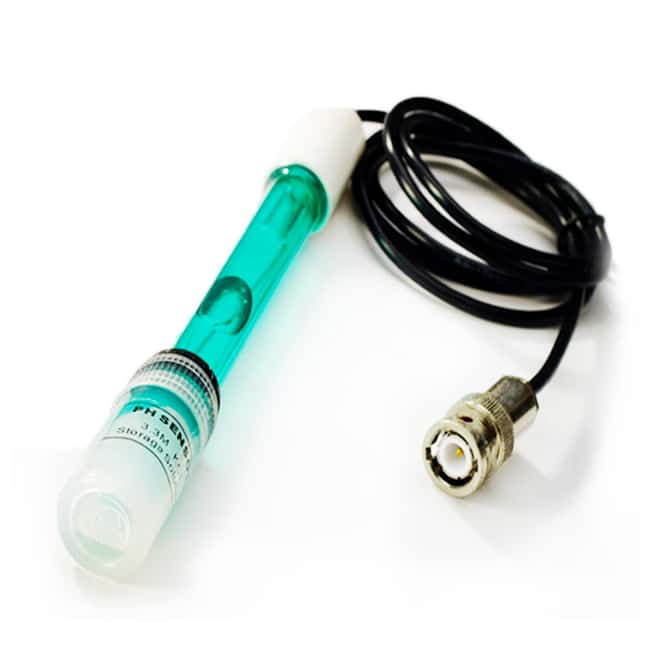
A suitable industrial pH sensor should provide stable readings, resist chemical attack, tolerate the process temperature and pressure, and allow convenient cleaning and maintenance.
Match the pH Sensor Material to the Application
The sensor body and electrode material should match the wastewater environment.
For general sewage treatment, a rugged industrial pH sensor is usually suitable. For chemical wastewater, PTFE, PVDF, or other corrosion-resistant materials may be needed. For lime slurry or dirty wastewater, choose a sensor designed to resist coating and clogging. For HF-containing wastewater, use a special pH electrode designed for hydrofluoric acid applications.
Choosing the wrong material can cause short sensor life, unstable readings, or frequent maintenance.
Consider Temperature, Pressure, and Installation Method
A pH sensor must be suitable for the actual process conditions.
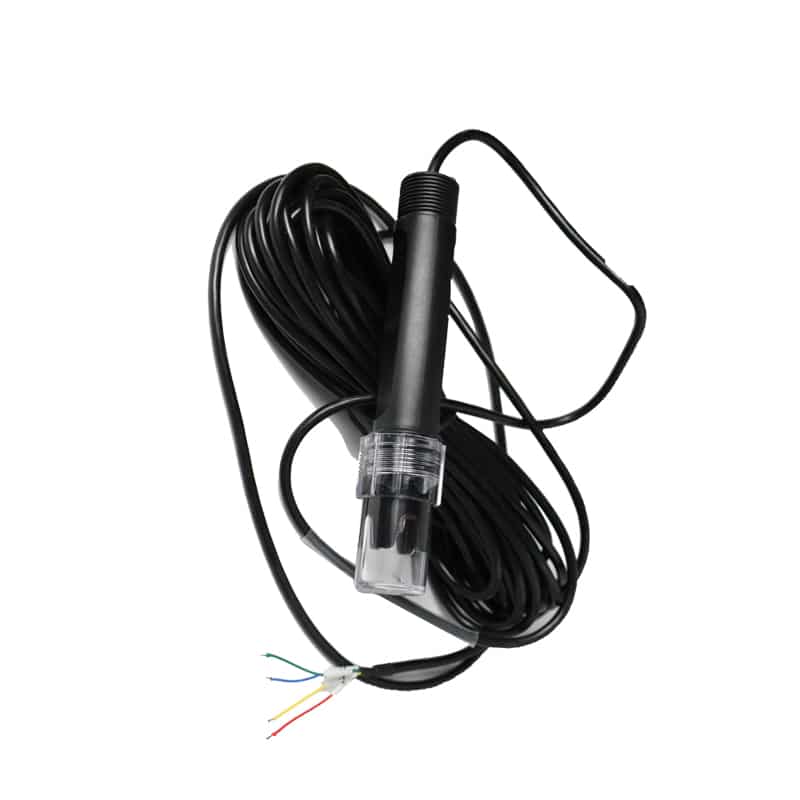
For open tanks and basins, submersible installation is common. For closed pipelines, inline installation may be required. For controlled sample flow or easier maintenance, a flow cell or bypass installation can be used.
Always check:
- Maximum operating temperature
- Maximum pressure
- Thread or mounting size
- Cable length
- Ease of removal for cleaning and calibration
Choose the Right Signal Output
The pH sensor or controller should match the site control system.
- 4–20mA output is suitable for standard PLC and dosing control.
- RS485 Modbus RTU is suitable for digital monitoring, SCADA, and remote data transmission.
- Relay output is useful for high/low alarm control or dosing pump control.
For wastewater treatment plants using online monitoring or centralized control, RS485 Modbus RTU can make system integration easier.
Match the pH Sensor to the Industrial Wastewater Application
Different wastewater applications require different sensor designs.
- Conventional sewage treatment: general industrial pH sensor
- Chemical wastewater: corrosion-resistant sensor material
- Lime slurry wastewater: anti-fouling or slurry-resistant electrode
- Low-conductivity water: electrode designed for low ionic strength water
- High-temperature wastewater: high-temperature pH electrode
- Strong acid or alkali wastewater: chemically resistant electrode
- HF-containing wastewater: special HF-resistant pH electrode
Summary
Choosing the right pH sensor for industrial wastewater depends on the wastewater composition, installation method, temperature, pressure, signal output, and maintenance conditions. A standard pH probe may work for general sewage treatment, but chemical wastewater, slurry, low-conductivity water, high-temperature wastewater, and HF-containing wastewater often require specialized pH electrodes.
For industrial wastewater projects, provide the process conditions before selecting a sensor. This helps ensure stable measurement, longer sensor life, and more reliable pH control.
Need a pH sensor for wastewater treatment? Contact APURE with your process conditions, and we’ll help you choose the right sensor for stable, reliable pH control.