
Sewage flowmeter is composed of water level flow sensor (probe) and upper computer (terminal) and communication cable, which is used to measure the volume flow of various sewage in the pipeline and in the channel.
Widely used in municipal water supply, steel, petroleum, chemical, electric power, industry, water conservancy, water resources and other sectors of the volume flow of liquid measurement, especially suitable for channels, small river flow measurement and environmental protection treatment of sewage measurement.
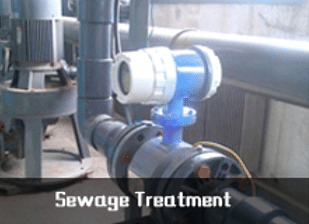
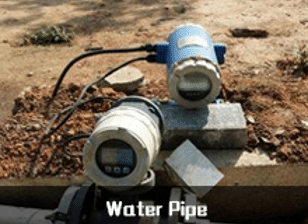

Why is sewage flow measurement important?
Accurate sewage flow measurement provides essential data for both wastewater treatment operation and environmental management.
Treatment process control
Flow data allows operators to adjust aeration, pumping, chemical dosing, sludge return, and disinfection according to the actual hydraulic load of the treatment system.
Influent and effluent monitoring
Comparing influent and effluent flow helps operators evaluate plant capacity, detect abnormal inflow or infiltration, and verify the volume of treated wastewater being discharged.
Pollutant load calculation
Pollutant concentration alone does not represent the total amount of pollution entering or leaving a treatment plant. Flow data is required to calculate mass loading for parameters such as COD, BOD, suspended solids, nitrogen, and phosphorus.
Pump and Lift Station Management
Flow meters can be used to monitor sewage lift stations, evaluate pump performance, detect blockages, and prevent excessive pump operation.
Environmental Compliance
Industrial facilities and wastewater treatment plants may be required to record discharge flow as part of their environmental permits and compliance reports.
Sewage flow meter products
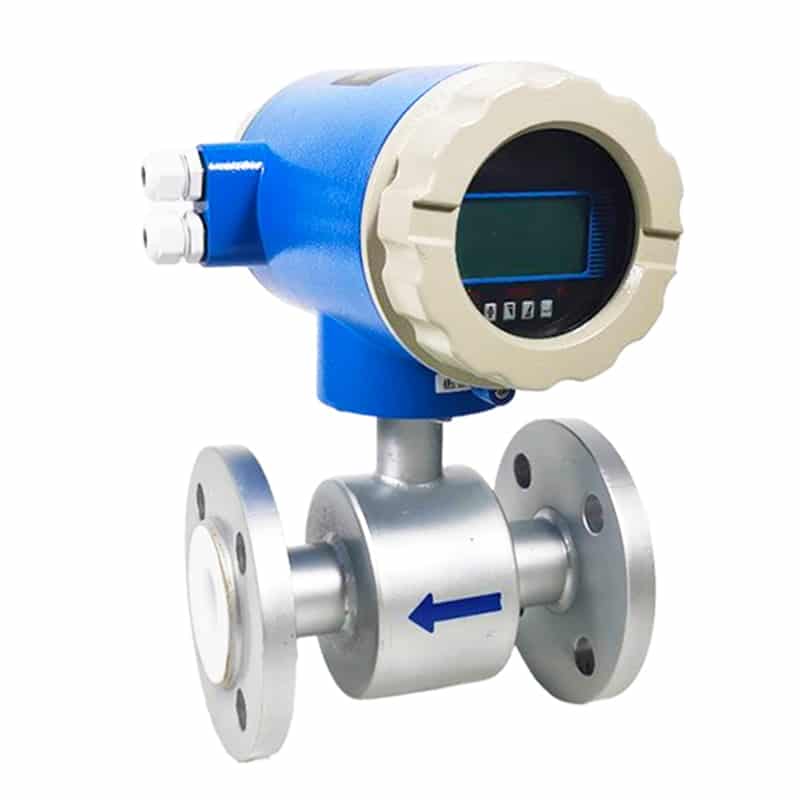
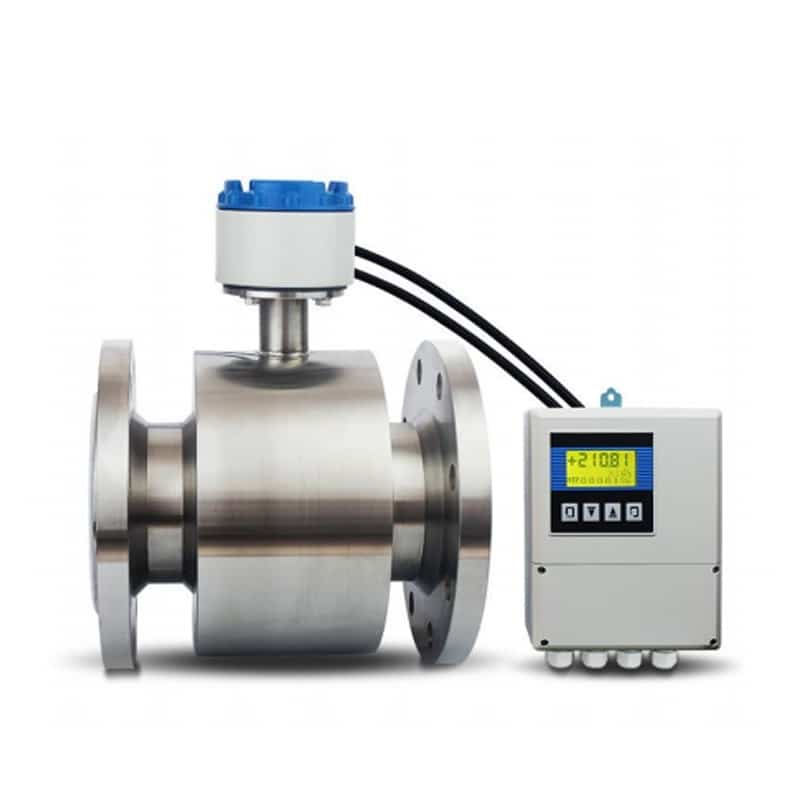
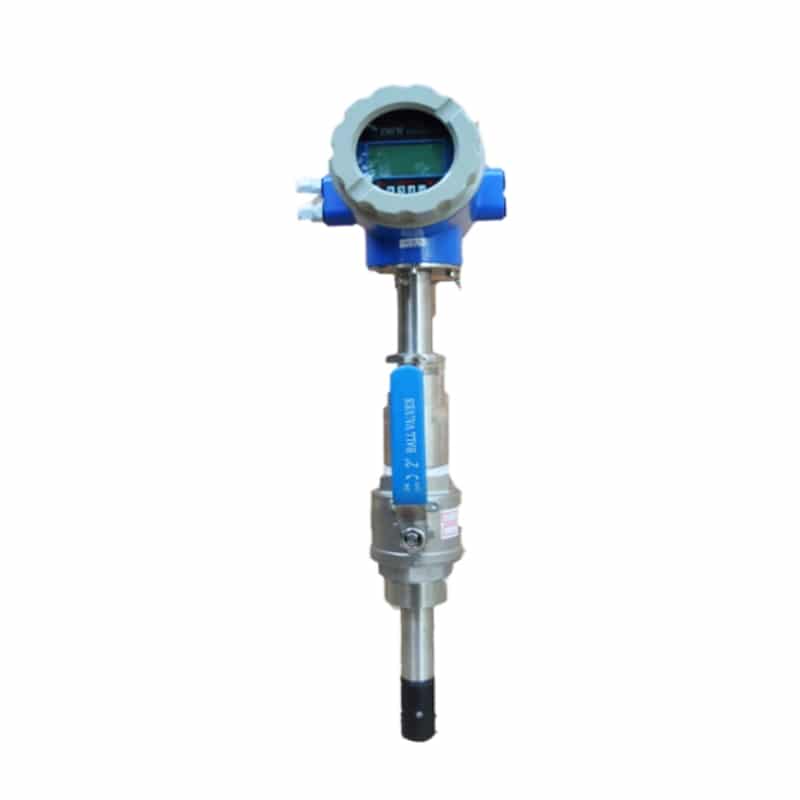
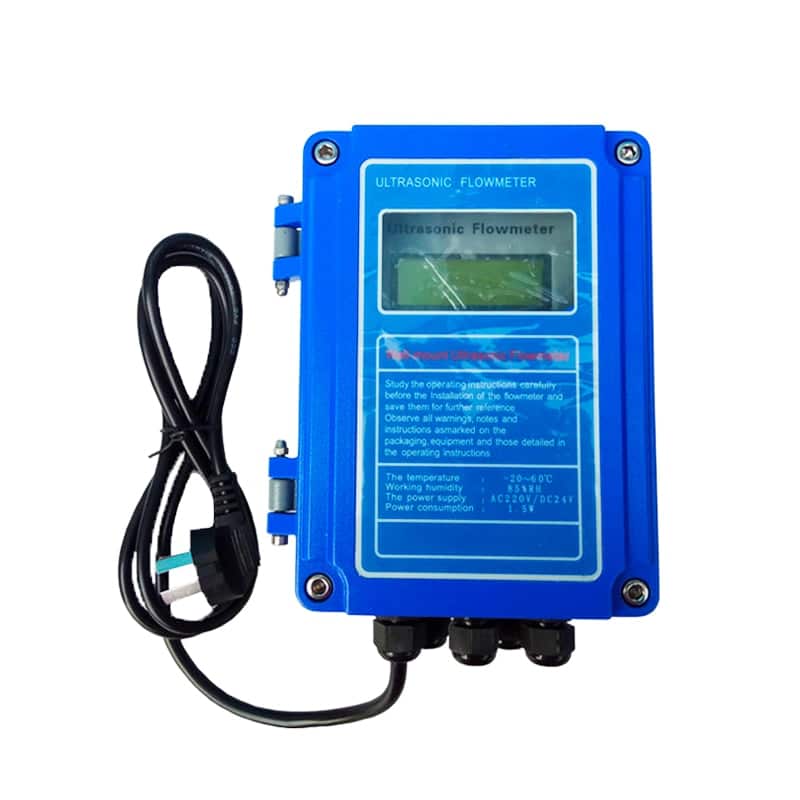
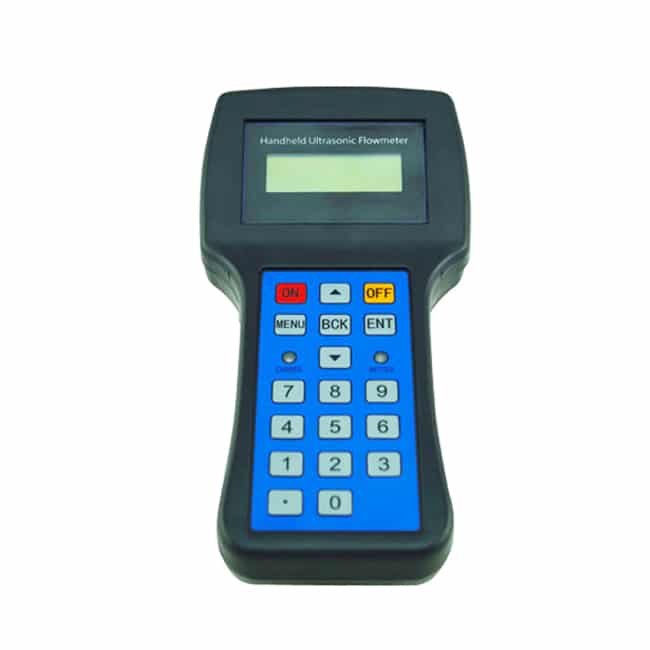
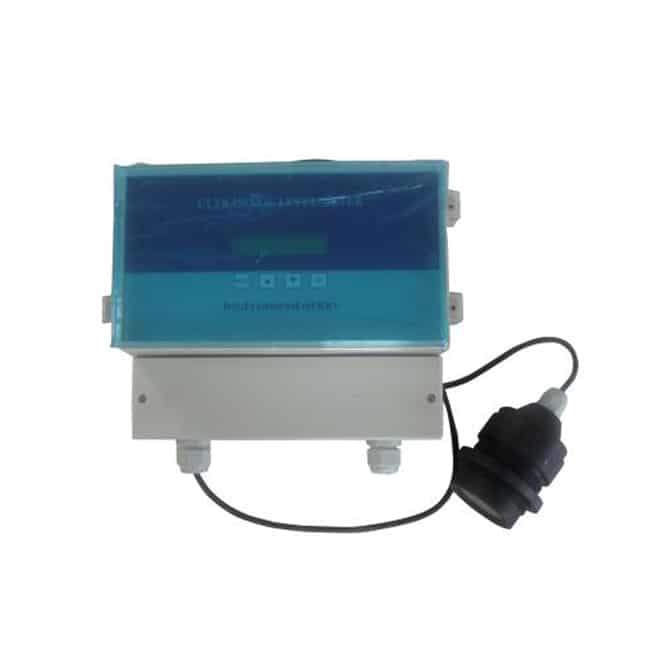
Wastewater flow meter selection
According to the actual situation on site and the comparison of different flow meters.
- Electromagnetic flowmeter measurement stability, wide range of applications, can measure a variety of media, but vulnerable to electromagnetic interference. As the diameter of the tube increases, it will become more expensive.
- Ultrasonic flowmeter low cost, high measurement accuracy, stable operation, easy to install and maintain, the price will not get higher and higher with the increase of tube diameter, but it will get more and more expensive due to the increase of sound range.
- Open channel flowmeter measurement range is wide, flow measurement is not affected by changes in the medium, but limited by the size of the measurement tank.
Generally speaking, in the case of meeting the open channel installation conditions, flow data is large, effluent flow meter flow can be conveyed through the open channel.
Spit flow meters and tank flow meters are used for related operations. In the actual measurement process, such equipment can meet the measurement accuracy requirements, but also to save energy. It uses self-flow method to convey sewage.
Advantages of Apure sewage flowmeters
- High Accuracy
- Measure raw wastewater, effluent, sludge
- Optional versions available to provide inlet protection for buried pipes or flood-prone areas
- No flanges, cut lines or welded pipe installations
- Plug-and-play design – just install and use
- Improves uptime and reduces pipeline downtime
- These flowmeters can be installed in wastewater systems, wastewater treatment, storm water storage plants, sewage, surface water discharge systems, cooling water pipelines and various chemical applications
Sewage flow meter installation requirements
Correct installation is essential for stable sewage flow measurement.
Keep a stable flow profile
Install the meter away from pumps, partially opened valves, elbows, tees, reducers, and other components that create turbulence.
Where possible, provide adequate straight pipe before and after the meter according to the manufacturer’s installation instructions.
Keep the measuring pipe full
For electromagnetic and transit-time ultrasonic flow meters, the pipe should remain completely filled.
Avoid installing the sensor at:
- The highest point of the pipeline
- A vertical downward pipe section
- A location where air may accumulate
- The free discharge end of a pipe
A vertical upward flow direction is often preferable for sewage containing solids because it helps keep the pipe full and reduces sediment accumulation.
Avoid electrode and sensor fouling
For wastewater containing grease, biological growth, or heavy solids, select an installation position that allows periodic inspection and cleaning.
Avoid low points where sediment may accumulate unless the sensor is specifically designed for that application.
Provide proper grounding
Electromagnetic flow meters require proper electrical grounding to obtain a stable measurement signal.
Grounding rings or grounding electrodes may be required when the pipe is plastic, lined, or electrically insulated.
Protect the transmitter
Install the transmitter where it is protected from flooding, excessive vibration, direct heat, and corrosive gas.
A split-type electromagnetic flow meter can be used when the sensor must be installed underground or in a flooded chamber while the transmitter remains in an accessible location.
Conclusion
Selecting a sewage flow meter begins with identifying the hydraulic condition of the application.
For a completely filled conductive wastewater pipe, an electromagnetic flow meter is usually the most reliable long-term solution. For temporary or non-invasive measurement, a clamp-on ultrasonic flow meter can be installed without cutting the pipeline. For raw sewage containing suspended solids or bubbles, Doppler technology may be considered. For gravity sewers and open discharge channels, an area-velocity meter or ultrasonic open channel flow meter is generally more appropriate.
No single flow meter is suitable for every sewage application. Pipe fullness, wastewater composition, solids content, flow range, installation conditions, communication requirements, and maintenance access should all be evaluated before selecting a model.
Apure supplies electromagnetic, ultrasonic, Doppler, and open channel flow measurement solutions for municipal sewage, industrial wastewater, sludge, drainage, and wastewater treatment applications.
Contact Apure and provide your pipe size, flow range, sewage composition, installation conditions, and required output signal. Our engineers will help you select a suitable sewage flow meter and configuration for your project.
FAQ
More articles on flow meters:
Electronic flow meter
Ultrasonic flow meter working principle
What is a flow sensor?
Select the right water flow meter for you