
A turbidity meter is an important instrument for measuring water clarity by detecting suspended particles such as sediment, organic matter, and microorganisms. The measurement result is usually expressed in NTU (Nephelometric Turbidity Units).
To maintain accurate and reliable readings, regular turbidity meter calibration is essential. Proper calibration helps ensure measurement accuracy, improve water treatment control, and extend sensor service life.
Why Is Turbidity Meter Calibration Important?
Over time, turbidity sensors may experience measurement deviation due to:
- Sensor surface contamination
- Suspended solids accumulation
- Optical component aging
- Installation environment changes
- Incorrect measurement conditions
Regular calibration ensures that the turbidity meter continues to provide accurate NTU readings for applications such as drinking water treatment, wastewater treatment, industrial process monitoring, and environmental water monitoring.
APURE turbidity sensors support calibration functions, including two-point calibration for applicable models, helping maintain measurement accuracy in different water-quality applications.
How Does a Turbidity Meter Work?
A turbidity meter uses an optical measurement principle. The sensor emits light into the water sample, and suspended particles scatter the light. The detected scattered light intensity is converted into a turbidity value, normally displayed in NTU.
Measurement accuracy can be affected by factors such as sensor fouling, air bubbles, particle characteristics, and installation conditions. Regular cleaning and calibration help maintain stable performance.
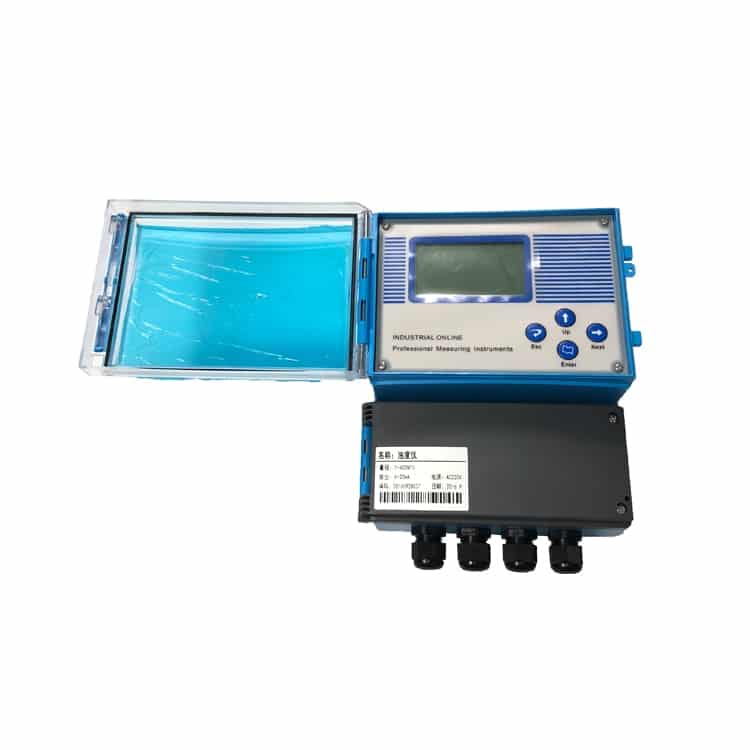

Turbidity Calibration Standards
Calibration requires turbidity standard solutions with known NTU values.
Common standards include:
- 0 NTU standard for zero-point calibration
- 20 NTU or 100 NTU standards for low and medium turbidity applications
- 400 NTU or higher standards for wastewater and high turbidity measurement
The selected calibration standard should be close to the expected operating range to achieve better accuracy.
How to Calibrate a Turbidity Meter?
The basic turbidity meter calibration process includes the following steps:
Clean the Sensor
Before calibration:
- Remove dirt or deposits from the optical surface
- Rinse the sensor with clean water
- Make sure no air bubbles remain on the sensor
A contaminated sensor is one of the most common causes of inaccurate turbidity readings.
Perform Zero Calibration
Place the sensor into a zero turbidity standard solution.
After the reading becomes stable:
- Select the zero calibration function
- Confirm the calibration value
- Save the setting
This establishes the instrument’s reference point.
Perform Span Calibration
Place the sensor into a standard solution with a known turbidity value.
After stabilization:
- Enter the standard NTU value
- Confirm the calibration
- Save the calibration result
Two-point calibration using zero and span values is commonly used for improved measurement accuracy.
Verify Calibration Results
After calibration:
- Test the sensor with a reference solution
- Compare the measured value with the standard value
- Repeat calibration if the deviation is too large
Common Turbidity Meter Calibration Problems
| Problem | Possible Causes | Solutions |
| Calibration failure | Dirty sensor surface, incorrect calibration solution, expired standard solution, incorrect settings | Clean the sensor, use fresh calibration standards, check calibration parameters, and repeat the calibration process |
| Turbidity readings are too high | Air bubbles on the optical window, sensor contamination, improper installation location | Remove air bubbles, clean the sensor surface, and relocate the sensor to a suitable measuring point |
| Turbidity readings are unstable | Excessive flow turbulence, vibration, poor sensor positioning, insufficient stabilization time | Improve installation conditions, reduce interference, and allow sufficient stabilization time |
| Measurement deviation after calibration | Incorrect calibration range, unsuitable standard solution, sensor aging | Select calibration standards close to the operating range, check sensor condition, and recalibrate |
| Frequent calibration required | High levels of suspended solids, biological growth, chemical deposits | Increase cleaning frequency, use automatic cleaning accessories, and optimize sensor installation |
Best Practices for Turbidity Sensor Calibration
For reliable long-term operation:
Clean Sensors Regularly
Prevent deposits and biological growth from affecting optical measurement.
Use Fresh Calibration Standards
Expired or contaminated standards may introduce calibration errors.
Maintain Calibration Records
Record:
- Calibration date
- Standard solution value
- Sensor condition
- Calibration results
Choose the Correct Installation Location
Avoid areas with:
- Excessive bubbles
- Strong vibration
- Chemical injection interference
- Poor water circulation
Conclusion
Regular turbidity meter calibration is essential for maintaining accurate and reliable water-quality measurements. Proper cleaning, suitable calibration standards, correct procedures, and routine maintenance help ensure stable sensor performance.
By selecting the right turbidity sensor and following recommended calibration practices, operators can improve measurement reliability and optimize water treatment processes. Contact APURE today to select the right turbidity measurement solution for your application.