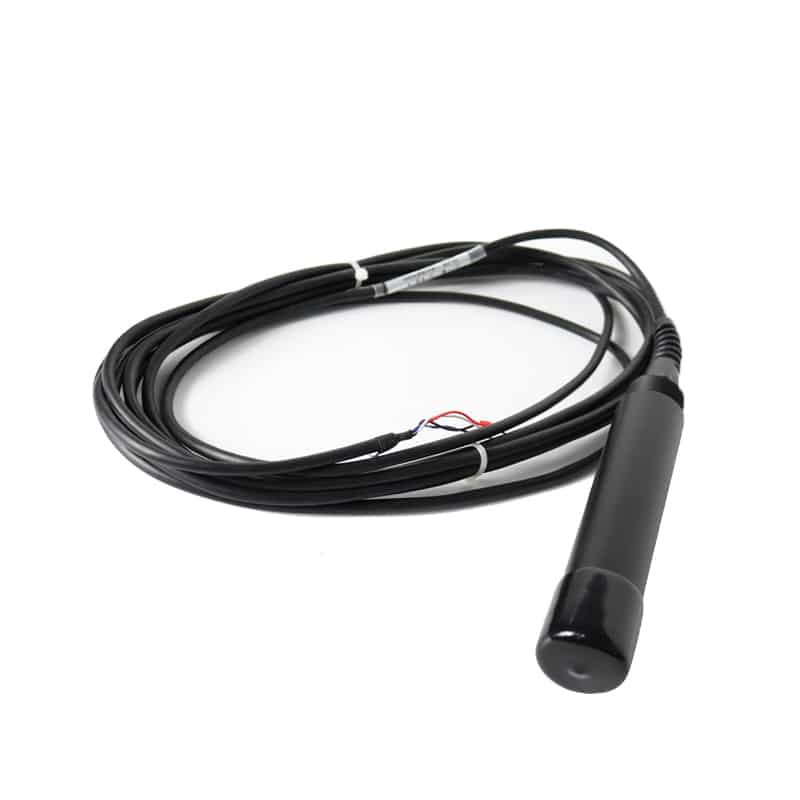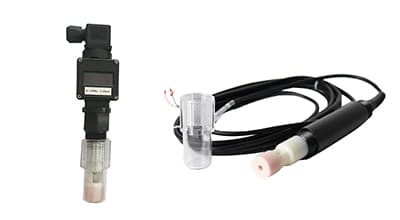
TSS-206A Total Suspended Solids TSS Sensor


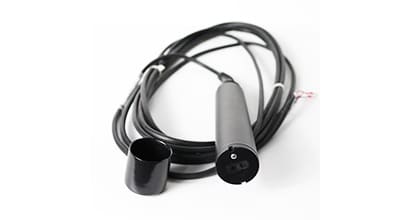
The Apure TSS-206A is an optical suspended-solids sensor. Its concentration output is an estimate from a calibrated light-scattering response; verify that calibration against representative reference samples from the intended process.
- On-line monitoring
- Continuous measurement
- Automation
The TSS-206A detects scattered light from particles in water. A stored optical calibration converts the response to a suspended-solids estimate; it does not directly weigh the solids. Verify the optical arrangement and calibration procedure for the supplied model rather than assuming a universal relationship for every sample.
Build and verify the site calibration
- Collect representative samples at the probe location while recording the stable optical reading. Analyze the samples using an appropriate laboratory suspended-solids reference procedure.
- Use paired optical and reference results across the actual operating interval to check or adjust the calibration using the supplied controller procedure. Keep an independent verification sample.
- Recheck the relationship when sludge composition, particle size, colour or the installation changes. An optical concentration estimate must not be transferred unchanged between different water matrices.
- Use mg/L or g/L for mass concentration. NTU describes turbidity; there is no universal NTU-to-mg/L conversion. MLSS refers to suspended solids in the mixed liquor at the specified treatment-process location.
Install and check the optical measurement
- Place the sensor in representative water within the approved temperature and pressure limits. Avoid trapped bubbles, deposits, direct aeration plumes and unapproved reflections from nearby walls or the vessel bottom.
- Clean the optical window using the supplied procedure, check for scratches and fouling, and verify with the specified standards or reference samples after service.
- Record the sensor/controller identities, measurement method, unit, calibration reference, temperature and installation. A change in colour, particle properties or sampling location can change the optical response.
For the listed RS485 output, confirm power, polarity, communication settings and the actual Modbus RTU register map. A built-in temperature sensor does not establish automatic compensation for changes in particle size, colour or sludge composition.
CHARACTERISTICS:
Optical suspended-solids estimates and turbidity are different measurements. A site-specific relationship may be developed from representative paired data, but there is no universal NTU-to-mg/L conversion. See the APURE Turbidity guide for the distinction and interpretation limits.
- light principle, built-in temperature sensor
- Support RS-485, Modbus/RTU protocol
- Optical fiber structure, strong resistance to external light interference
- Infrared LED light source with high stability
- IP68 protection, water depth within 20 meters
- Convenient, fast, stable and easy to maintain
| Brand | Apure |
|---|---|
| Model | TSS-206A |
| Precision | ±5%(based on the water quality), ±0.3℃ |
| Medium temperature | 0-50℃ |
| Electrode measurement range | 0~2000.0mg/L |
| Resolution | 0.1mg/L, 0.1℃ |
| Cable length | 5m, other lengths customizable |
| Signal isolation output | RS485 |
| Level of protection | IP68 |