
Calibration of pH meter is a critical process to ensure accurate and reliable pH measurements, essential for industries like water treatment, laboratories, food production, and agriculture. Proper calibration helps maintain the precision of the instrument and ensures consistent results across various applications.
What is A pH Meter?
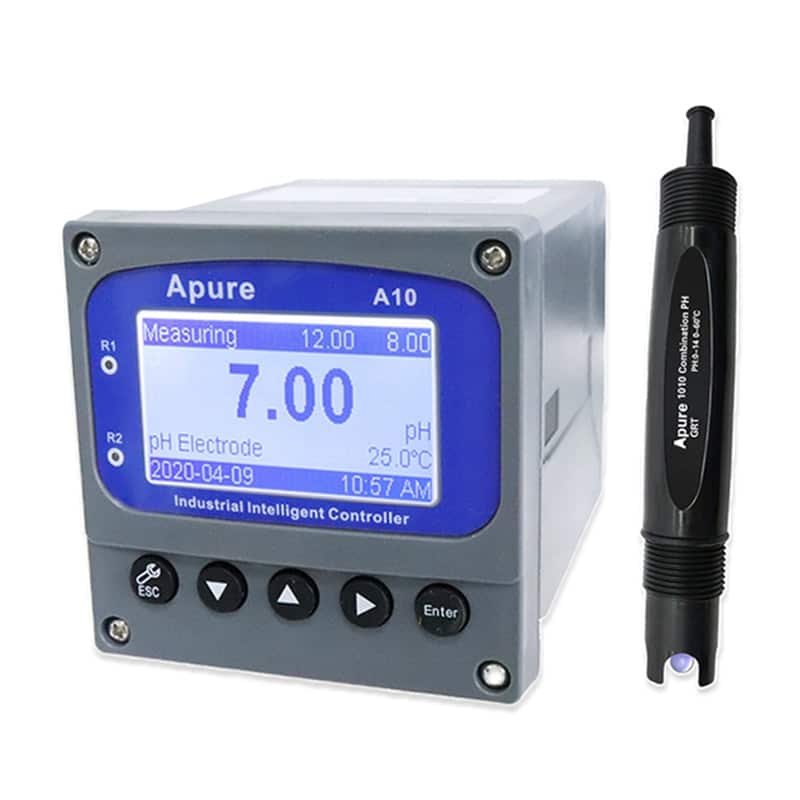
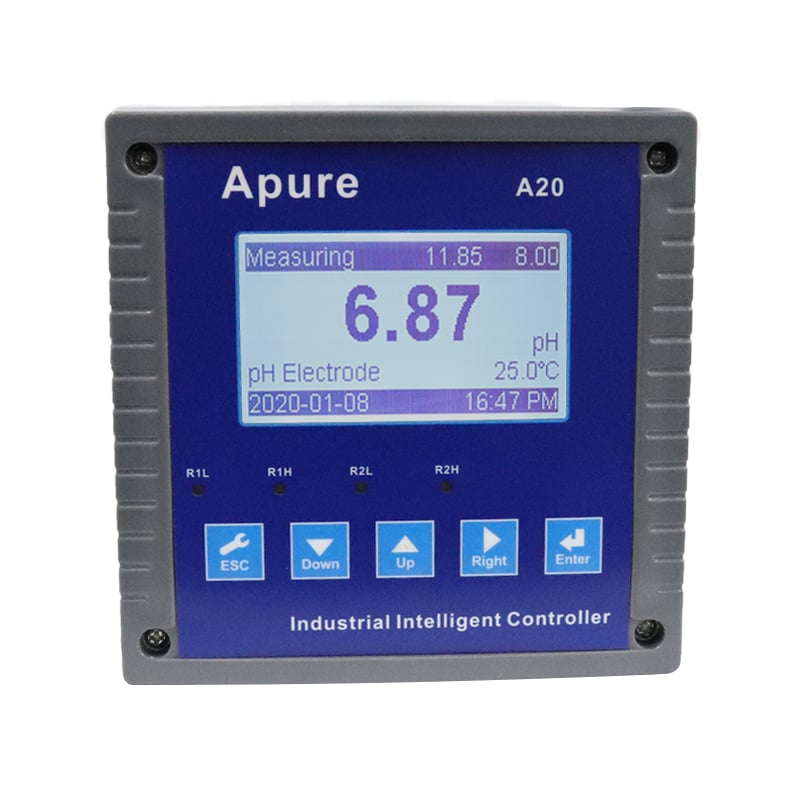
A pH meter is an instrument used to measure the acidity or alkalinity of a solution and is widely used in laboratories, industry, agriculture, and water treatment. It senses the concentration of hydrogen ions in a solution by means of an electrode and converts it into a readable pH value, usually in the range of 0 to 14.
Why Should I Calibrate My pH Meter?
Calibration is an important step in ensuring that pH meter measurements are accurate. Over time, the electrode can be affected by contamination, wear and tear, or the external environment, causing readings to drift. If not calibrated regularly:
- Measurements may be inaccurate, affecting experimental results or process efficiency.
- The performance of the electrodes may degrade, shortening their useful life.
- Industry or laboratory standards compliance requirements cannot be met.
How do I Properly Calibrate A pH Meter?
The key to calibrating a pH meter is to adjust the instrument with a standard buffer to ensure that it provides accurate readings before taking measurements. Proper calibration requires not only operational procedures in place, but also well-maintained equipment and solutions.
Steps for Proper Calibration of pH Meters
Preparation
- Clean the electrode to avoid residues that could affect the reading.
- Rinse the electrode with distilled or deionized water and dry gently.
Selection of Buffers
- Use at least two standard buffers (usually pH 7.0 and pH 4.0 or 10.0).
- Make sure the buffers are not expired and are stable at room temperature.
Calibrating the First Point (pH 7.0)
- Dip the electrode into the pH 7.0 buffer.
- Wait for the reading to stabilize, then adjust the instrument display to 7.00.
Calibrate Second Point (pH 4.0 or 10.0)
- Rinse the electrode with distilled or deionized water and gently blot away excess water with a lint-free tissue. Do not rub or wipe the sensitive glass bulb.
- Adjust the instrument display to the corresponding buffer value.
Verification and Completion
- An optional third buffer is available for verification.
- After confirming calibration, measure a sample of known pH value to check accuracy.
When Should You Use Two-Point or Three-Point pH Calibration?
The number of calibration points should be selected according to the expected pH range of the samples, the required measurement accuracy, and the capabilities of the pH meter.
When to Use Two-Point Calibration
Two-point calibration is suitable for most routine laboratory and industrial measurements when the expected sample pH falls within a relatively narrow range.
Common buffer combinations include:
- pH 7.00 and pH 4.01 for acidic samples
- pH 7.00 and pH 10.01 for alkaline samples
For example, if wastewater samples normally have a pH between 5 and 7, calibration with pH 7.00 and pH 4.01 buffers normally provides an appropriate calibration range. If process water is normally between pH 8 and 10, pH 7.00 and pH 10.01 buffers are more suitable.
A two-point calibration determines both the electrode’s zero-point response and its slope. It is generally sufficient when:
- Samples remain on one side of neutral pH
- The expected measurement range is narrow
- Routine process monitoring is being performed
- The instrument supports only two-point calibration
- The application does not require the highest possible accuracy across a wide pH range
When to Use Three-Point Calibration
Three-point calibration normally uses pH 4.01, pH 7.00, and pH 10.01 buffers. It is recommended when samples cover a wide pH range or when measurements may include both acidic and alkaline solutions.
Consider three-point calibration when:
- Samples range from acidic to alkaline
- One instrument is used for several different sample types
- High measurement accuracy is required
- The application is quality-critical or highly regulated
- The pH electrode response may not be perfectly linear across the full measurement range
- The meter calculates separate calibration segments between the buffers
The third calibration point provides additional information about electrode behavior across a wider range. However, adding more calibration points cannot compensate for expired buffers, a contaminated electrode, incorrect temperature measurement, or a defective meter.
Solutions Required for pH Meter Calibration
pH 7.0 buffer (neutral): used to calibrate the midpoint.
pH 4.0 buffer (acidic): for calibration in the acidic range.
pH 10.0 buffer (alkaline): for calibration in the alkaline range.
Ensure that fresh, unexpired buffers are used and that the solutions are kept at room temperature.
Laboratory pH Meter vs. Online pH Controller Calibration
Laboratory pH meters and online pH controllers use the same basic electrochemical principle, but their calibration procedures have different operational requirements.
| Item | Laboratory pH meter | Online pH controller |
| Main purpose | Testing individual samples | Continuous process monitoring and control |
| Measurement environment | Controlled laboratory conditions | Tanks, pipes, channels, treatment systems, or process vessels |
| Electrode condition | Usually cleaned between samples | Continuously exposed to fouling, pressure, flow, and process chemicals |
| Typical calibration method | Two-point or three-point buffer calibration | Commonly one-point or two-point calibration, depending on the controller |
| Temperature control | Buffers and samples can be stabilized easily | Process and calibration temperatures may differ significantly |
| Output handling | Normally no process output to manage | 4–20 mA, relays, alarms, and dosing outputs may need to be held or disabled |
| Sensor removal | Electrode is already accessible | Sensor may need to be removed from an immersion holder, flow cell, or pipeline |
| Verification | Check with a control buffer or reference sample | Compare with a laboratory measurement of a fresh process sample |
| Main risks | Buffer contamination and sample carryover | Process interruption, incorrect dosing, electrical interference, fouling, and installation effects |

How Often Do I Need to Recalibrate My pH Meter?
The frequency of calibration depends on the frequency of use and environmental conditions:
High accuracy measurements: Calibrate before each use.
Normal daily use: Calibrate once a day.
After prolonged storage: calibrate before use.
After electrode cleaning or replacement: calibration is necessary.
Is Calibration the Same As A Measuring pH Meter?
No, it is not.
Calibration: is the adjustment of an instrument to ensure accurate readings. Calibration requires a buffer and specific procedures.
Measurement: A pH test is performed on a sample using a calibrated instrument without adjusting the instrument.
pH Meter Troubleshooting
- Unstable readings: Check for damaged electrodes or loose connections.
- Failed calibration: Use fresh buffer and make sure electrode is clean.
- Slow response: Electrode may be old or contaminated, try cleaning or replacing.
- Severe drift: Electrode may need to be replaced or stored in improper conditions.
| Problem | Possible Cause | Recommended Apure Product |
| pH reading drifts | Aging electrode / dirty probe | Industrial pH electrode |
| Calibration failed | Wrong buffer / damaged probe | pH calibration solution + new electrode |
| Unstable online reading | Poor installation / grounding issue | Online pH controller |
How to Clean pH Meter Properly?
Daily cleaning: Rinse the electrode with distilled water and dry gently.
Minor contamination: Wash with a neutral cleaning solution and rinse well.
Organic contamination: Soak in ethanol or detergent.
Grease contamination: Treat with a weak alkaline cleaning solution.
Calcium or salt crystals: Clean with dilute acid (e.g. 0.1M hydrochloric acid).
After cleaning: Soak in electrode storage solution to restore performance.
How can I Make My pH Meter More Accurate?
- Periodic calibration: Calibrate according to frequency of use and application requirements.
- Keep the electrode moist: Soak the electrode in an electrode preservation solution when not in use.
- Use the correct buffer: Make sure the buffer is fresh and not expired.
- Avoid contamination: Clean the electrode before and after measurement to avoid cross contamination.
- Correct storage: Avoid high temperature or dry environment to damage the electrode.
Summary
A pH meter is an instrument used to measure the acidity or alkalinity of a solution and is widely used in a variety of industries. Regular calibration of the pH meter is essential to ensure its accuracy and longevity, and usually involves two or more points of calibration using a standard buffer solution. The electrodes need to be clean and the buffer solution fresh when calibrating, and the frequency of calibration depends on the usage and environment. Keeping electrodes clean, storing them in a suitable environment, and cleaning and maintaining them regularly are also essential to ensure accurate measurements.
Apure offers other water quality testing analyzers, flow measurement instruments, level measurement instruments, temperature and pressure measurement instruments and more. Please contact us if you need more information.