
Chemical Oxygen Demand (COD) Sensor
Chemical oxygen demand (COD) is the oxygen-equivalent demand of substances oxidized under the conditions of a specified chemical method. It is commonly reported as milligrams of oxygen per litre (mg O₂/L), but it is not the water’s dissolved-oxygen concentration and it does not directly identify or measure every organic pollutant.
Laboratory dichromate COD and online UV/optical COD estimation are different measurements. A reference method uses defined digestion chemistry and quality controls. An optical instrument measures absorbance or another spectral response and may report a COD-equivalent estimate through an instrument- and matrix-specific calibration or model. Use the method required by the monitoring objective, permit or authority.
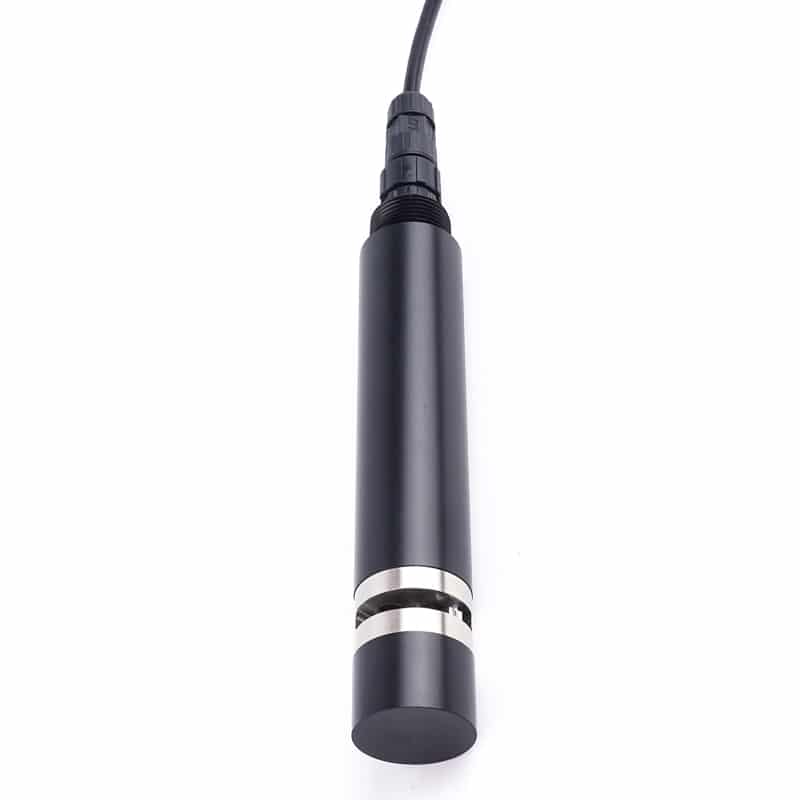
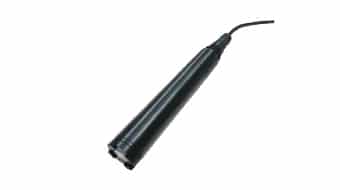
Product evidence note: The COD-208 card below identifies the existing commercial product pathway. Model ranges, accuracy, resolution, method conformity and compensation claims must remain on the product page and require current official documentation before reuse here.
What does COD actually represent?
COD represents an operationally defined chemical-oxidation response. Under a specified method, the test determines how much oxidant is consumed by substances that react under those conditions and expresses that response as an equivalent amount of oxygen.
Depending on the method and sample, the response can include many oxidizable organic substances, some inorganic reducing substances, and suspended or dissolved material included in the tested sample fraction. COD does not provide a compound-by-compound inventory. Two samples can have the same COD while containing different substances.
What does mg O₂/L mean for COD?
mg O₂/L is an oxygen-equivalent reporting unit. It expresses the measured oxidant consumption as the mass of oxygen that would have an equivalent oxidizing capacity per litre of sample. It does not mean that the sample contains that amount of dissolved oxygen or that oxygen gas was directly measured.
Is COD the same as organic-matter concentration?
No. COD is often related to oxidizable organic loading, but it is not a direct concentration of total organic matter. The result depends on the analytical method, the compounds present and any oxidizable inorganic constituents. COD does not determine carbon mass, molecular identity, toxicity or biodegradability. Use TOC for a carbon-based measurement, BOD for a defined biological oxygen-demand test and compound-specific methods when pollutant identity matters.
How is laboratory COD measured?
Laboratory COD is measured by applying a defined chemical oxidation method to a representative sample and determining how much oxidant was consumed. In common dichromate methods, the sample is digested under strongly acidic conditions with a known amount of dichromate. The remaining oxidant or reduced-chromium response is then determined colorimetrically or titrimetrically, depending on the method.
A defensible result requires the specified sample collection, preservation and mixing; tested sample fraction and dilution; digestion conditions; blanks, standards and quality controls; applicable range; and interference handling.
EPA Method 410.4, for example, covers specified water and waste samples, uses sealed-tube dichromate digestion at 150 °C for two hours and determines the response at 600 nm. ISO 15705:2002 specifies a small-scale sealed-tube dichromate method. Their ranges and limitations belong to those methods and must not be applied automatically to every COD procedure or sensor.
This page is a method-selection guide, not a laboratory SOP. Follow the current approved method, laboratory quality system and safety requirements for the actual analysis.
Why is potassium dichromate used in reference COD methods?
Potassium dichromate is used in widely recognized COD methods because it is a strong, stable oxidant that produces a reproducible method-defined response for many water and wastewater samples. The method does not oxidize every compound completely and can also respond to oxidizable inorganic substances. Dichromate COD is therefore not a direct total-organic-matter measurement.
Why can chloride interfere with dichromate COD?
Chloride can be oxidized under dichromate COD conditions and consume oxidant, producing a positive bias if the method does not adequately control or correct the effect. Its importance depends on chloride concentration, COD level, sample matrix and analytical procedure.
High-salinity water should not be handled with one generic correction rule. EPA Method 410.3 is specifically a high-level titrimetric COD method for saline waters and includes a chloride-correction procedure. ISO 15705 states its own method-specific chloride scope. Neither source creates one universal chloride threshold for every COD method.
How does an online UV/optical COD sensor work?
An online optical COD instrument measures how the sample affects light and uses a calibration or model to estimate a COD-related value. The instrument may use one UV wavelength, a reference wavelength or a broader UV-Vis spectrum. It does not perform acid dichromate digestion in the water.
Optical source → sample path → detector response → compensation/model → reported COD-equivalent estimate
UV-absorbing constituents can correlate with reference COD in a stable water matrix. The relationship can change when composition, suspended matter, color, nitrate, salinity, treatment process or sample fraction changes. Published wastewater studies show that local or matrix-specific calibration often improves UV-Vis COD-estimation performance.
Is UV254 the same as COD?
No. UV254 is an optical absorbance measurement at or near 254 nm; COD is a method-defined oxygen-equivalent chemical-oxidation result. Many aromatic or conjugated structures absorb UV light near 254 nm, so UV254 can track changes in some waters. It does not respond equally to every oxidizable compound and can be affected by particles and other absorbing constituents. EPA Method 415.3 treats UV254, TOC/DOC and specific UV absorbance as distinct measurements, not as COD.
What is SAC254?
SAC254 is the spectral absorption coefficient at 254 nm. It expresses absorbance in relation to optical path length, commonly in inverse metres under the stated method or instrument convention. SAC254 is an optical parameter, not a dichromate COD result. It can correlate with COD or TOC in a particular matrix, but the relationship must be demonstrated for the intended application. There is no universal UV254 × factor or SAC254 × factor conversion to COD.
Laboratory dichromate COD vs online optical COD estimation
| Dimension | Laboratory dichromate COD | Online optical COD estimation |
|---|---|---|
| Measurement basis | Chemical oxidation and digestion under a specified method | Absorbance or spectral response plus calibration/model |
| Direct result | Method-defined oxygen-equivalent COD | Optical signal; displayed COD is an estimated output |
| Response time | Batch result after preparation, digestion and determination | Rapid or continuous signal |
| Matrix sensitivity | Chloride, reducing inorganic substances, heterogeneity, range and QC | Composition, color, solids, bubbles, fouling, optical path and model |
| Calibration/QC | Method standards, blanks and specified quality controls | Instrument model plus representative verification against a chosen reference method |
| Regulatory role | Use when accepted or required by the governing program | Usually trend, early warning or control; compliance requires explicit evidence |
| Main strength | Traceable, method-defined analytical result | High-frequency visibility and fast response |
| Main limitation | Reagents, digestion and method-specific hazards/interferences | Surrogate estimate can change with matrix and optical condition |
An online sensor does not automatically replace laboratory COD. A useful program may combine continuous optical trends with scheduled reference measurements and event-based confirmation.
COD vs BOD vs TOC
| Parameter | What it represents | Measurement basis | Typical time | Main limitation |
|---|---|---|---|---|
| COD | Oxygen-equivalent demand of substances oxidized under a specified chemical method | Chemical oxidation; commonly dichromate digestion | Often hours | Does not identify pollutants or directly determine biodegradability, toxicity or carbon mass |
| BOD₅ / CBOD₅ | Oxygen consumed during a defined biological incubation | Dissolved-oxygen change under specified incubation conditions | Five days | Sensitive to biology, toxicants, seeding, nitrification and test conditions |
| TOC | Carbon measured after converting organic carbon to a detectable form | Carbon-based instrumental analysis | Often minutes after preparation | Does not directly state oxygen demand, biodegradability or pollutant identity |
COD, BOD and TOC can correlate within a stable process, but no universal ratio or conversion exists. COD is often higher than BOD₅ for the same wastewater, yet “always higher” is too absolute. Read the detailed COD vs BOD guide.
CODCr vs CODMn / permanganate index
CODCr and CODMn should not be treated as interchangeable labels. CODCr commonly denotes a dichromate-based result. CODMn is used in some regional or historical contexts for a permanganate-based oxygen-demand result; the applicable standard may instead call it the permanganate index.
The oxidants, reaction conditions, method scope and oxidation efficiency differ, so numerical results may differ for the same water. ISO 8467:1993 defines a permanganate-index method. It is not an alternate name for ISO 15705 dichromate COD. Record the actual method, and do not infer regulatory equivalence.
What can high COD indicate?
High or rising COD can indicate a greater method-defined oxidizable load at that sampling point. In a stable process, trends can help detect influent changes, compare treatment stages and investigate abnormal discharges. Interpret the result with flow, sample point, method, composition and related parameters.
COD can help indicate
- changing oxidizable load in influent or effluent;
- treatment-stage or removal trends under a consistent method;
- batch or process changes;
- a possible shock load or abnormal discharge;
- when a paired reference sample is needed.
COD cannot determine by itself
- the identity or concentration of a specific pollutant;
- whether water is toxic or safe;
- whether material is biodegradable;
- exact BOD, TOC or carbon availability;
- microbiological safety or universal compliance.
Why do laboratory and online COD results disagree?
They can disagree because they use different measurement principles and may not represent exactly the same sample. Disagreement is not automatically proof that the sensor or laboratory is wrong.
- Time and location: confirm a matched sample beside the sensor.
- Sample fraction: compare filtered, settled, homogenized and flowing samples.
- Reference method: record method, range, dilution and chloride treatment.
- Handling: check transport, preservation, temperature, settling and volatile loss.
- Optical interference: inspect bubbles, solids, color, other absorbers, fouling and saturation.
- Model mismatch: confirm the relationship represents current composition and range.
- Process change: review raw materials, cleaning chemicals and treatment changes.
- Quality control: verify both the laboratory batch and instrument checks.
Do not force agreement by changing one coefficient after a single unmatched sample.
How is an online COD estimate calibrated and verified?
- Define the decision: trend, alarm, control or another purpose.
- Identify the exact sensor, configuration, optical path and output definition.
- Choose and document the reference COD method and sample fraction.
- Collect paired observations at the same place and time across representative conditions.
- Record window condition, bubbles, solids, color, flow and maintenance.
- Configure the relationship only by the approved instrument procedure.
- Validate on a separate representative sample set and review bias and residuals.
- Record model version, units, range, dataset and acceptance criteria.
- Verify after meaningful matrix, process, installation or maintenance changes.
There is no universal verification interval. Use the manufacturer procedure, process risk, fouling history, quality-control results and applicable requirements.
COD measurement interferences and matrix effects
| Measurement | Condition | Possible consequence | Check |
|---|---|---|---|
| Laboratory dichromate COD | Chloride | Positive bias or large correction | Select a suitable method and follow its chloride provisions |
| Laboratory dichromate COD | Reducing inorganic substances | Contribute even when not organic | Interpret COD as method-defined oxidant demand |
| Laboratory dichromate COD | Heterogeneous solids or poor mixing | Nonrepresentative aliquot | Follow representative sampling and homogenization requirements |
| Online optical estimate | Window fouling or biofilm | Drift, slow response or bias | Inspect, clean and verify before recalibration |
| Online optical estimate | Bubbles or suspended particles | Spikes, scatter or sample-fraction mismatch | Inspect flow, installation and paired data |
| Online optical estimate | Color, nitrate or changing UV absorbers | Model bias | Review matrix and reference samples |
| Online optical estimate | Process/source change | Poor correlation | Treat as a new validation condition |
How should I choose a COD monitoring method?
| Need | Recommended approach | Limitation/check |
|---|---|---|
| Permit or regulatory reporting | Method accepted by the permit or authority with required QA/QC | An online display is not automatically acceptable |
| Continuous process trend | Online optical estimate validated for the site and backed by reference samples | Matrix, fouling and model effects require verification |
| High-chloride wastewater | Laboratory method selected for salinity; assess optical feasibility separately | No universal chloride rule |
| Variable industrial wastewater | Paired optical/reference program across representative states | Revalidate after composition changes |
| Surface-water early warning | Continuous trend plus event-triggered confirmation | Trend does not identify pollutant or prove safety |
| Biodegradability or carbon | Use BOD/biological tests or TOC/DOC as appropriate | No universal conversion from COD |
Troubleshooting online COD readings
| Symptom | Possible causes | Checks |
|---|---|---|
| Unstable or spiking | Bubbles, turbulence, solids, intermittent immersion or real process pulses | Observe installation, flow and simultaneous events |
| Positive bias vs lab | Fouling, color, other UV absorber, reference-method bias or sample mismatch | Clean, identify lab method and compare matched samples |
| Negative bias vs lab | Weak optical response, blocked path, settling, saturation or model limit | Inspect optics, range and sample fraction |
| Gradual drift | Deposits, component aging, composition shift or reference-lab drift | Review maintenance/QC, clean and verify |
| Sudden step change | Real load change, cleaning/dosing event, movement or configuration change | Check logs, installation and a matched sample |
| Poor correlation after process change | Different composition, color, solids or treatment chemistry | Revalidate; do not reuse old coefficients automatically |
Do not recalibrate automatically whenever a value looks wrong. First separate process change, reference-method mismatch, optical interference and instrument performance.
Applications
Wastewater treatment
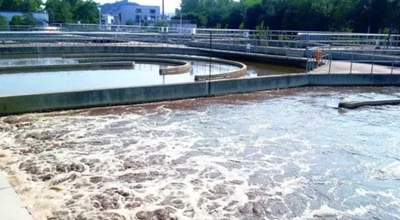
Continuous optical COD estimates can show influent changes, treatment-stage trends and possible shock loads faster than periodic laboratory sampling. Use the signal for alarms or control only after demonstrating reliability for that matrix and decision.
Industrial wastewater
Industrial matrices can change with raw materials, batches, cleaning chemicals, color, salinity and treatment steps. Validate across representative production states and reconsider the relationship after process changes.
River and surface-water monitoring
Optical monitoring can support trend detection and event-triggered sampling. A sudden COD-equivalent change does not identify the pollutant, prove toxicity or establish drinking-water safety.
Process control and early warning
Fast optical response can support equalization, load balancing, dosing decisions and alarms after validation. COD alone does not directly state biodegradable-carbon availability.
APURE product pathway
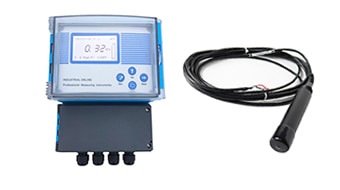
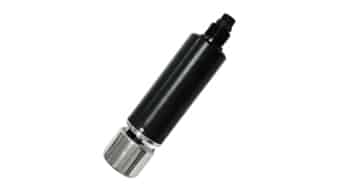
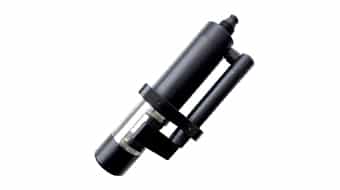
APURE’s commercial COD-208 UV Cod Sensor is described on its product page as an optical instrument. The product title remains unchanged while the technical explanation distinguishes optical response from dichromate COD.
Before specifying the product, confirm the supplied model/revision, output definition, range, error basis, optical path, reference method, sample matrix, cleaning, installation and communication protocol. The current public table is not evidence of EPA/ISO conformity or regulatory replacement.
Review the COD-208 product page or contact APURE with the wastewater source, expected range, solids/color/salinity, reference COD method, installation point and control objective.
COD FAQ
Does COD identify the pollutant in water?
No. COD reports a combined method-defined oxidant demand. Compound-specific analysis is required to identify and quantify pollutants.
Does high COD mean water is toxic or unsafe?
No. High COD can indicate greater oxidizable load, but toxicity and safety depend on which substances or organisms are present, their concentrations and the exposure context.
Is COD the dissolved-oxygen concentration?
No. COD is an oxygen-equivalent demand. Dissolved oxygen is a separate measurement of oxygen present in water.
Can UV254 be converted to COD?
Not with one universal factor. A relationship may be developed for a stable matrix using representative paired optical and reference COD data, then validated and periodically checked.
Can an online COD sensor replace laboratory COD?
Not automatically. Online optical estimation is valuable for trends and process control. Use the method required by the permit or authority for compliance unless the specific online method is explicitly accepted.
Is COD always higher than BOD?
COD is often higher than BOD₅ for the same wastewater, but “always” is not defensible because the methods have different scopes, interferences and uncertainties.
Are CODCr and CODMn interchangeable?
No. They use different oxidants and method conditions, so their numerical results and regulatory meanings may differ.
How often should an online COD sensor be verified?
There is no universal interval. Set frequency from the manufacturer procedure, process risk, fouling history, reference plan, quality-control results and applicable requirements.
Sources and revision note
- ISO 15705:2002
- EPA Method 410.4
- EPA Method 410.3
- ISO 8467:1993
- EPA Method 415.3
- Rieger, Langergraber and Siegrist (2006)
- Lepot et al. (2016)
- Li et al. (2020)
Editorial revision date: 2026-11-11. No technical reviewer is claimed.
Product categories
Related articles

Main water quality indicators
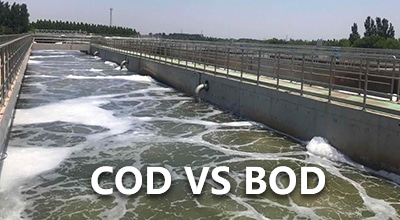
COD VS BOD
Why is water quality important?
What is ORP?
What is pH in water test?
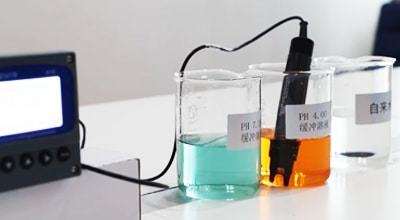
pH Sensors: Working Principle, Selection and Calibration

pH test applications in various industries
Dissolved Oxygen Probe How It Works?

What Is Municipal Water?
3 Main Water Quality Parameters Types
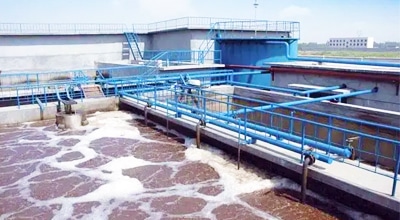
Solution of Water Pollution: 10 Practical Methods
Ammonia in wastewater
