Ammonia & Ammonium Sensor
Ammonia in water is not one interchangeable number. Unionized ammonia (NH3), ammonium ion (NH4+), total ammonia nitrogen (TAN) and a result reported as mg/L as N describe different species or reporting bases. A defensible result identifies the analyte, method, units, sample conditions and intended decision.
In water, NH3 and NH4+ exist in a pH- and temperature-dependent equilibrium. At the same TAN value, higher pH generally produces a larger unionized NH3 fraction; in freshwater, higher temperature also generally increases that fraction. This matters in aquaculture and aquatic-life interpretation because NH3 is generally the more toxic form. It does not create one universal “safe ammonia” value for every species, water use or jurisdiction.
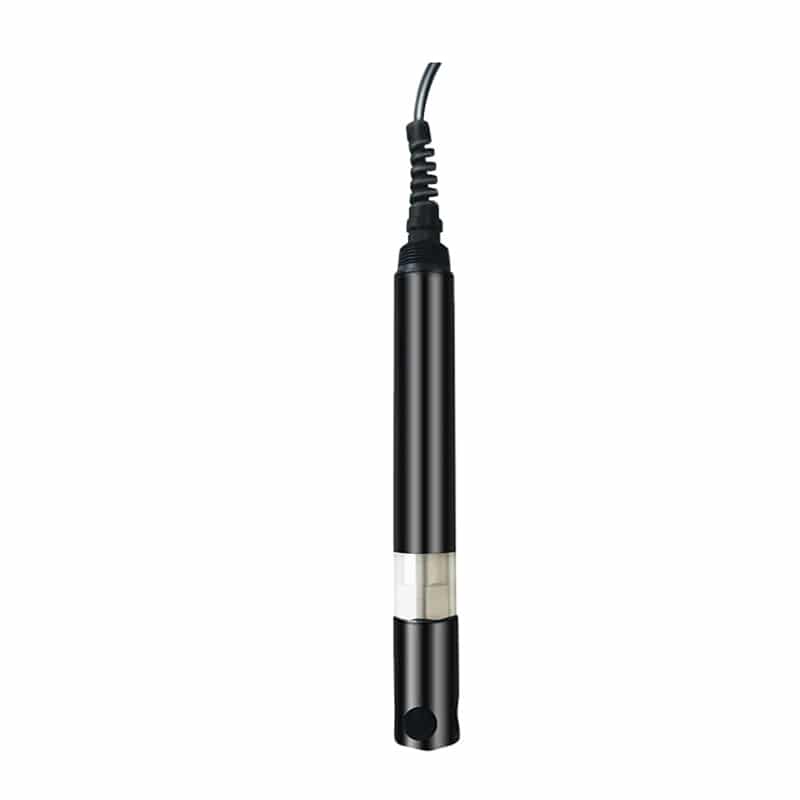
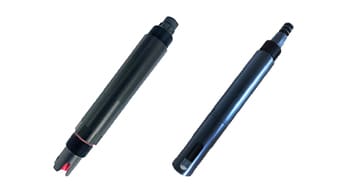
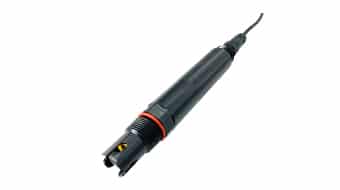
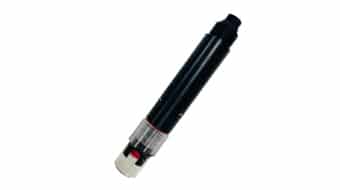
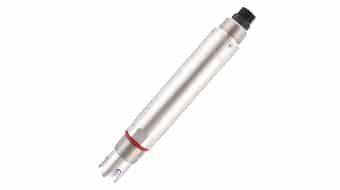
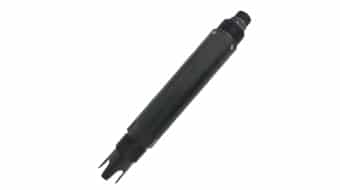
APURE’s listed NHN-206 uses a PVC-membrane ammonium ion-selective electrode (ISE). An ammonium ISE responds directly to NH4+ ion activity; it is not automatically a direct NH3 or TAN measurement. Confirm whether the supplied system reports NH4+, NH4-N, NH3-N, TAN or another calculated value before comparing its output with a laboratory result or limit.
Product evidence note: Keep the current NHN-206 product card. Do not add or propagate its range, accuracy, concentration resolution, pH/TAN calculation, interference compensation or regulatory conformity until a current APURE manual/datasheet defines the measured species, reporting basis and test conditions.
Ammonia, ammonium and TAN: what is the difference?
Ammonia is NH3; ammonium is NH4+. TAN is the combined nitrogen contributed by both forms when reported on a nitrogen basis.
| Term | Chemical/reporting meaning | What must accompany a number |
|---|---|---|
| Ammonia, NH3 | Unionized ammonia molecule | State whether the result is mg/L NH3 or mg/L NH3-N |
| Ammonium, NH4+ | Positively charged ammonium ion | State whether the result is mg/L NH4+ or mg/L NH4-N |
| Total ammonia | Combined NH3 + NH4+ under the named analytical definition | State method and whether the result is as N or as a full species |
| TAN | Total ammonia nitrogen: nitrogen contributed by NH3 and NH4+ | Normally mg/L as N under the applicable definition; verify the program/method |
| Ammonia nitrogen | A method/market/regulatory phrase, often for combined ammonia reported as N | Do not infer the exact species, fraction or instrument output from the phrase alone |
| NH3-N | Nitrogen mass contained in NH3 | Not the same numerical basis as mg/L NH3 |
| NH4-N | Nitrogen mass contained in NH4+ | Not the same numerical basis as mg/L NH4+ |
The equilibrium is commonly written:
NH3 + H2O ⇌ NH4+ + OH−
This equation describes the acid-base relationship in water. Avoid treating NH4OH as a separate dominant dissolved compound that an instrument necessarily measures.
What does mg/L as N mean?
mg/L as N reports only the mass of nitrogen per litre, not the mass of the complete NH3 or NH4+ species. Numbers on different bases cannot be compared directly.
Using nitrogen atomic mass 14.0067, NH3 molecular mass 17.03052 and NH4+ molecular mass 18.03846:
NH4-N (mg/L as N) = NH4+ (mg/L) × 14.0067 / 18.03846NH4+ (mg/L) = NH4-N (mg/L as N) × 18.03846 / 14.0067NH3-N (mg/L as N) = NH3 (mg/L) × 14.0067 / 17.03052NH3 (mg/L) = NH3-N (mg/L as N) × 17.03052 / 14.0067
Approximate factors are:
| Convert from | Convert to | Multiply by |
|---|---|---|
| mg/L NH4+ | mg/L NH4-N | 0.7765 |
| mg/L NH4-N | mg/L NH4+ | 1.2878 |
| mg/L NH3 | mg/L NH3-N | 0.8225 |
| mg/L NH3-N | mg/L NH3 | 1.2159 |
Worked reporting-basis example
If a verified result is 5.00 mg/L NH4+, the nitrogen-basis result is:
5.00 × 14.0067 / 18.03846 = 3.88 mg/L NH4-N
This changes the mass basis only. It does not convert ammonium into ammonia and does not determine TAN or toxicity.
Assumptions: the source value and species are correctly identified; the same sample volume is used; the operation is only a molecular-mass conversion; and no pH/temperature speciation calculation is implied.
How do pH and temperature change the NH3/NH4+ balance?
Higher pH shifts a larger fraction of the combined ammonia system toward unionized NH3. In freshwater, higher temperature also generally increases the NH3 fraction at the same pH.
EPA’s 2013 freshwater ammonia criteria cite the Emerson et al. equilibrium relationship. For zero/low-salinity freshwater:
pKa = 0.09018 + 2729.92 / (273.2 + T)
fNH3 = 1 / (1 + 10^(pKa − pH))
where:
Tis the water temperature in °C;pHis measured for the same water and time;fNH3is the fraction of total ammonia present as unionized NH3 on a consistent molar or nitrogen basis.
If TAN is reported as mg/L as N:
NH3-N = TAN × fNH3NH4-N = TAN × (1 − fNH3)
To express the NH3 portion as full-species mass, multiply NH3-N by 17.03052 / 14.0067.
Equilibrium limitations
This is a freshwater equilibrium calculation, not a universal compliance or toxicity calculator. Ionic strength and salinity affect the relationship. The calculation also fails if TAN, pH and temperature do not represent the same sample/time or if their analytical definitions are mismatched. Use the equation and criteria specified by the applicable method, authority or aquaculture program.
Is TAN the same as toxic ammonia?
No. TAN includes both NH3 and NH4+ on a nitrogen basis; it does not directly equal the unionized NH3 concentration.
Unionized NH3 is generally the more toxic form to aquatic organisms, but toxicity depends on species, life stage, exposure duration, pH, temperature and other water chemistry. EPA freshwater aquatic-life criteria are expressed as TAN and use pH- and temperature-dependent equations; the published values are scientific recommendations for a defined freshwater aquatic-life context, not universal limits for drinking water, wastewater, aquaculture or every jurisdiction.
Do not use one TAN or NH3 number to declare water safe, toxic or compliant. Identify the protected use, organism/population where relevant, exposure duration, method, reporting basis and governing source.
What can ammonia measurement tell you?
It can help indicate
- changes in nitrogen loading;
- influent, process-stage or effluent trends;
- possible nitrification breakthrough when interpreted with process data;
- the need to review aeration, pH, temperature or alkalinity;
- aquaculture nitrogen stress risk when TAN is interpreted with pH, temperature, species and exposure;
- when a confirmatory/reference analysis is needed.
It cannot determine by itself
- complete water safety;
- exact toxicity in every water or species;
- nitrate, nitrite, total nitrogen or organic nitrogen;
- full nitrification health or microbial activity;
- the identity/source of a pollutant;
- universal treatment compliance;
- whether an online result is equivalent to a required laboratory method.
How is ammonia or ammonium measured?
Different methods respond to different species or method-defined reactions. “Ammonia sensor” does not identify one universal principle.
| Method | Direct response | Typical strength | Main limitation |
|---|---|---|---|
| Ammonium ISE | NH4+ ion activity at a selective membrane | Continuous/in-situ process trend | Ionic strength, competing ions, temperature, membrane condition and matrix matter; not automatically TAN |
| Gas-sensitive ammonia electrode | NH3 diffusing through a gas-permeable membrane after method-specific sample conditioning | Potentiometric laboratory determination across a defined method range | Conditioning, volatile amines and method handling matter; not the same as a PVC NH4+ ISE |
| Colorimetric/spectrophotometric method | Method-defined color response after reagent chemistry | Reference/laboratory analysis with defined calibration and QC | Reagents, interferences, sample handling and method range apply |
| Flow-analysis spectrometric method | Automated method-defined ammonium-nitrogen response | Repeatable laboratory throughput | Requires the named method, reagents and QC; not an in-situ ISE |
EPA Method 350.1 is a semi-automated colorimetric ammonia-nitrogen method. ISO 7150-1 defines a manual spectrometric ammonium method, and ISO 11732 covers flow analysis with spectrometric detection. Their ranges and interferences belong to those methods and must not be applied to an online ISE by analogy.
For compliance reporting, use the method named by the permit, regulation or authority. A method’s presence in this guide is not an APURE product-conformity claim.
How does an ammonium ion-selective electrode work?
An ammonium ISE develops a membrane potential related logarithmically to NH4+ ion activity relative to a reference electrode.
A typical measurement chain is:
NH4+ activity at selective membrane → membrane potential → reference comparison → temperature-aware calibration/model → displayed result
The Nernst-type relationship can be written in simplified form as:
E = E0 + S log10(aNH4+)
where:
Eis the measured electrode potential;E0combines reference/system constants under the calibration conditions;Sis the electrode slope, which depends on temperature and electrode behavior;aNH4+is ammonium-ion activity, not automatically concentration.
Calibration relates the activity response in standards to the selected displayed concentration basis. Differences in ionic strength, interfering ions and the sample/reference junction can make a real sample behave differently from a simple standard. The membrane is selective, not exclusive.
Is potassium an interference for an ammonium ISE?
Potassium can produce a positive bias for many ammonium-selective membranes, but the size of the effect is electrode- and matrix-specific.
The practical importance depends on the NH4+:K+ relationship, the membrane/selectivity coefficient, ionic strength, calibration and any verified compensation channel. Do not borrow an interference coefficient or compensation claim from another manufacturer and apply it to NHN-206. Obtain the NHN-206 selectivity and compensation documentation, then verify the installed system against representative reference samples.
Is an ammonium ISE the same as a gas-sensitive ammonia electrode?
No. An ammonium ISE responds to NH4+ activity at an ion-selective membrane; a gas-sensitive ammonia electrode measures NH3 that diffuses through a gas-permeable membrane after method-specific conditioning.
The gas-sensitive analytical method commonly raises sample pH so the equilibrium shifts toward NH3. The diffusing gas changes an internal solution response sensed by the electrode system. This laboratory method description does not establish the principle or output of every commercial “ammonia sensor,” and it does not describe the listed PVC-membrane NHN-206.
Online ammonium ISE vs laboratory/reference analysis
| Dimension | Online ammonium ISE | Laboratory/reference method |
|---|---|---|
| Direct response | NH4+ ion activity at the membrane | Method-defined colorimetric, potentiometric, chromatographic or other analytical response |
| Response time | Rapid/continuous when installed correctly | Batch result after sampling, preparation and analysis |
| Continuous monitoring | Yes | No |
| Matrix sensitivity | Competing ions, ionic strength, pH/speciation, temperature, fouling, flow and membrane/reference condition | Method-specific sample preservation, reagents, interferences, range and QC |
| Calibration | Standards plus model/manufacturer procedure; may need matrix adjustment | Method calibration, blanks, controls, spikes and other specified QC |
| Regulatory role | Process trend/control unless explicitly accepted for the use | Use the method required by the permit/rule/authority |
| Main strength | High-frequency process visibility | Method-defined, traceable result |
| Main limitation | Output depends on electrode/matrix and may not be TAN | Delayed result and method-specific labor/reagents |
Online and laboratory values can support one another, but they are not automatically interchangeable.
Ammonium ISE interferences and operating conditions
| Interference / condition | Relevant method | Possible effect | Practical check |
|---|---|---|---|
| Potassium and other competing cations | Ammonium ISE | Usually positive bias or distorted response, depending on membrane/selectivity and ratio | Obtain model-specific data; compare K+ and NH4+ ranges; verify with matched samples |
| Ionic strength / salinity | Ammonium ISE | Activity differs from concentration; calibration transfer may fail | Match/adjust matrix only by the approved procedure; validate saline use separately |
| pH change | NH4+ ISE and TAN interpretation | Changes NH3/NH4+ distribution; an NH4+ reading can change even if total ammonia does not | Measure matched pH and temperature; do not treat pH compensation as universal TAN conversion |
| Temperature | ISE response and speciation | Changes electrode slope/response and NH3 fraction | Allow temperature equilibrium; use verified compensation and record temperature |
| Fouling/biofilm/solids | Online ISE | Drift, slow response or unstable reference/membrane behavior | Inspect/clean by the current manufacturer procedure; verify before recalibration |
| Membrane aging/conditioning | Online ISE | Slope loss, slow stabilization or calibration failure | Review slope/history; condition or replace only by the approved procedure |
| Flow/bubbles/installation | Online ISE | Noise, lag, poor representativeness or intermittent contact | Inspect immersion/flow and sampling point; compare a simultaneous sample |
| Volatile amines | Gas-sensitive ammonia electrode | Positive interference in applicable methods | Follow method interference controls; do not transfer to NH4+ ISE without evidence |
| Residual chlorine/color/matrix chemistry | Colorimetric methods | Method-specific positive/negative bias or reaction change | Follow the named method’s pretreatment and QC |
The direction and magnitude of an effect depend on method and instrument. This table is a diagnostic framework, not an NHN-206 performance specification.
How should an ammonium sensor be calibrated and verified?
Calibration establishes the sensor response under defined conditions; verification checks whether it still produces an acceptable result for the intended sample and decision.
A defensible workflow is:
- Define the required output: NH4+, NH4-N, TAN or another stated basis.
- Identify the exact probe revision, controller/register units and current manufacturer procedure.
- Inspect and condition the membrane/reference system as specified.
- Prepare or obtain traceable standards on the required species/reporting basis.
- Allow standards and sensor to reach the required temperature equilibrium.
- Calibrate over the intended range by the approved one- or multi-point procedure.
- Review slope, stability and acceptance criteria from the actual manual; do not invent universal limits.
- Verify with an independent standard and a representative sample/reference method.
- Record standards, lots, units, temperature, slope/result, maintenance, firmware/register settings and operator.
- Reassess after membrane replacement, failed verification, material matrix/process change or unexplained drift.
There is no universal calibration interval. Use the current manufacturer procedure, process risk, matrix stability, fouling history, quality-control results and regulatory/contract requirements.
Why do online and laboratory ammonia values disagree?
Disagreement can come from different reporting bases, different species/methods or different samples—not only sensor failure.
Check in this order:
- Are both values on the same basis: NH4+, NH4-N, NH3-N or TAN as N?
- Were the samples taken at the same location and time?
- Did pH or temperature change between the in-situ reading and sampling?
- Which laboratory method and sample fraction were used?
- Were preservation, transport, filtration and holding time appropriate?
- Did potassium, salinity/ionic strength or another matrix constituent change?
- Is the sensor fouled, insufficiently conditioned or outside its verified range?
- Did both the laboratory QC and sensor verification pass?
Do not force agreement by changing calibration after one unmatched comparison.
How is ammonia used in wastewater process monitoring?
Ammonia/ammonium trends can show nitrogen loading and nitrification breakthrough, but ammonia alone does not diagnose the biological process.
Useful wastewater context includes:
| Monitoring objective | Relevant ammonia result | Additional context required | Limitation |
|---|---|---|---|
| Influent load trend | Method-defined TAN/NH4-N concentration plus flow | Flow, sampling time and wastewater source | Concentration alone is not a mass load |
| Nitrification performance | NH4-N/TAN before and after the aerobic stage | DO, pH, temperature, alkalinity, SRT/process conditions, nitrite/nitrate | Low ammonia alone does not prove complete nitrogen removal |
| Breakthrough/alarm | Continuous verified NH4+ or NH4-N trend | Sensor status, process events and confirmatory sample | Alarm basis must match the configured output |
| Aeration/process control | Fast ammonium trend | DO, energy/control logic, pH/alkalinity and site validation | Do not infer one universal control setpoint |
| Effluent reporting | Required method and basis | Permit, sample type and laboratory QC | Online value is not automatically the compliance result |
Read Ammonia in wastewater for the process-focused guide.
How should ammonia be interpreted in aquaculture?
Use the sequence TAN → matched pH and temperature → unionized NH3 fraction → species/life-stage/exposure guidance.
- Confirm whether the analytical result is TAN as N, NH4-N, NH4+ or another basis.
- Measure pH and temperature at the same time and location.
- Use an equation/table appropriate to freshwater or salinity conditions and the governing program.
- Convert to unionized NH3 on the required basis without mixing mg/L as N and full-species mass.
- Compare only with guidance for the relevant species, life stage, duration and jurisdiction.
- Review DO, nitrite, stocking/feeding, biofilter condition and recent process changes.
Do not publish “ammonia above X mg/L kills fish” without those conditions. A project-specific alarm is not a universal safe level.
Ammonia vs nitrite, nitrate and total nitrogen
| Parameter | What it represents | Monitoring implication |
|---|---|---|
| NH3 / NH4+ / TAN | Reduced inorganic nitrogen species/system | Tracks ammonia loading and nitrification input/breakthrough when properly defined |
| Nitrite, NO2− / NO2-N | Intermediate oxidation state | May indicate incomplete nitrification or another process condition; requires its own method |
| Nitrate, NO3− / NO3-N | More oxidized inorganic nitrogen form | Can support nitrification/denitrification assessment; not a substitute for ammonia |
| Total nitrogen | Method-defined sum/conversion of multiple inorganic and organic nitrogen forms | Broader nitrogen balance/compliance parameter; an ammonium-only sensor does not measure TN |
One result cannot universally substitute for another. Always state whether the value is the full ion or as N.
Troubleshooting online ammonium readings
| Symptom | Possible causes | Practical checks |
|---|---|---|
| Unstable reading | Bubbles, poor immersion/flow, loose connection, moving solids, unstable reference, real process pulses | Observe installation and trend; inspect cable/reference; compare a simultaneous grab sample |
| Persistent high bias | Potassium/competing-ion effect, matrix mismatch, wrong unit conversion, contamination, lab basis mismatch | Confirm units; review K+/matrix; run independent verification and matched reference sample |
| Persistent low bias | Membrane response loss, poor conditioning, range issue, NH3 shift at high pH, sample mismatch | Review slope/conditioning; record pH/temperature; confirm sample and basis |
| Gradual drift | Fouling, membrane aging, reference/junction change, process chemistry shift | Inspect/clean; review maintenance and slope history; verify before recalibration |
| Step change after pH shift | Real NH3/NH4+ redistribution, process addition or compensation/configuration effect | Check matched TAN, pH and temperature; do not assume total ammonia changed |
| Poor lab correlation | Different time/location, preservation, method, fraction, basis or matrix | Build a paired-sample record with method metadata and QC |
| Slow response | Fouling, cold/unequilibrated sensor, membrane conditioning or low concentration | Allow stabilization; inspect/clean/condition by manual; verify range |
| Failed calibration | Wrong/degraded standard, unit error, temperature mismatch, damaged/aged membrane, reference problem | Prepare independent standard; inspect procedure and slope; replace only when justified |
| Seasonal change | Temperature/speciation, salinity/ionic-strength shift, source/load or biological-process change | Trend pH, temperature, conductivity/salinity and supporting process parameters |
How should I choose an ammonia/ammonium monitoring method?
| Need | Recommended approach | Why | Limitation/check |
|---|---|---|---|
| Permit/compliance reporting | Method accepted by the permit/rule/authority | Produces the defined legal analytical result | An online sensor is not automatically acceptable |
| Continuous wastewater control | Online ammonium ISE validated for the matrix plus reference checks | Rapid process visibility | Interference, fouling and reporting basis must be controlled |
| Aquaculture risk interpretation | TAN/reference result plus matched pH/temperature; continuous monitoring where validated | Supports NH3-fraction interpretation | Species/exposure and salinity context remain necessary |
| Drinking-water/chloramination operation | Method/instrument selected for the treatment objective and required range | Supports chlorine-ammonia control and nitrification monitoring | No universal target or method fits every system |
| Variable industrial wastewater | Paired online/reference program across process states | Tests matrix robustness | Revalidate after composition changes |
| Ammonium ion specifically | Verified NH4+ method/ISE with correct unit basis | Directly targets ammonium response | Does not automatically provide TAN or NH3 |
Confirm before specifying an APURE system:
- monitoring objective and required reference/regulatory method;
- exact species and reporting basis;
- minimum/normal/maximum expected range;
- pH, temperature, potassium, salinity/ionic strength and other matrix conditions;
- solids, fouling, flow and maintenance access;
- calibration standards and reference-data availability;
- installation, materials, pressure and temperature limits;
- output/register units, RS-485 settings, logging and alarms;
- current model manual/datasheet and revision;
- acceptance and ongoing verification plan.
APURE product path
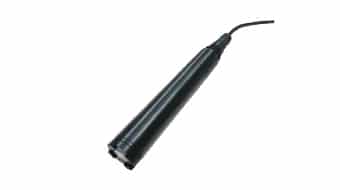
The NHN Online Ammonia Nitrogen Sensor is listed as an NHN-206 ammonium-ISE product. Before quotation or configuration, state the required result (NH4+, NH4-N or TAN), expected matrix/range, pH/temperature context, interfering ions, installation and receiving-device units. APURE must confirm the supplied model documentation and output basis before the value is used for control or comparison.
Frequently asked questions
Is ammonia the same as ammonium?
No. Ammonia is unionized NH3; ammonium is charged NH4+. They coexist in a pH- and temperature-dependent equilibrium.
Is TAN the same as NH3?
No. TAN is the nitrogen contributed by NH3 and NH4+ together under the stated definition. NH3 is only the unionized portion.
Can mg/L NH4+ be compared directly with mg/L as N?
No. Convert the reporting basis using molecular masses and keep the species label. The numerical values differ.
Does an ammonium ISE measure TAN?
Not directly. It responds to NH4+ activity. TAN requires an analytically valid definition/calculation or a suitable reference method with matched pH/temperature context.
Is ammonium harmless?
No absolute statement is defensible. NH4+ is generally less acutely toxic than unionized NH3, but effects and criteria depend on organism, exposure and water chemistry.
How often should an ammonium sensor be calibrated?
There is no universal interval. Follow the exact current manual and adjust the plan to matrix stability, fouling, verification results, process risk and regulatory/contract requirements.
Can an online sensor replace laboratory ammonia analysis?
Not universally. Online monitoring is valuable for trend and control after validation. Use the method required by the applicable permit, rule or authority for compliance reporting.
Authoritative references
- EPA 2013 Freshwater Aquatic Life Ambient Water Quality Criteria for Ammonia
- USGS: Ammonia or Ammonium? What’s the difference?
- EPA approved inorganic non-metal methods
- WHO ammonia drinking-water fact sheet
- ISO 7150-1:1984
- ISO 11732:2005
Product categories
Related articles
Ammonia in water treatment
Ammonia vs Ammonium
What is pH in water test?
pH Sensors: Working Principle, Selection and Calibration

pH test applications in various industries
COD VS BOD
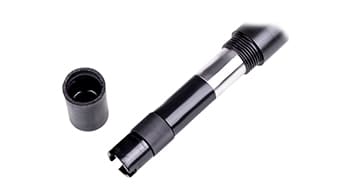
Dissolved Oxygen Probe How It Works?
Ammonia in wastewater
Nitrate in water quality
What Is Municipal Water?