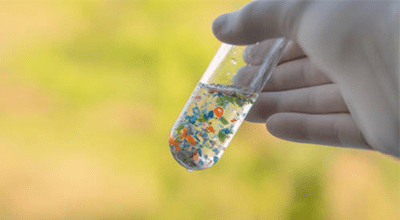
Transparency Sensor
Water transparency (or water clarity) is an important indicator of water quality, which is closely related to light penetration and attenuation in submerged ecosystems and is important for understanding changes in water ecology and biogeochemical processes, such as photosynthesis and growth of phytoplankton, sediment transport and resuspension. In fact, water clarity is a function of chlorophyll, total suspended matter and colored dissolved organic matter (CDOM) concentrations.

What is water transparency?
Transparency is an index of water quality, which can be divided into transparent, sub-transparent and translucent, and is also an important basis for judging the degree of black odor in black and smelly water.
Turbidity and transparency
Turbidity and transparency both describe how light behaves in water, but they are not the same measurement. Turbidity is an instrument response to scattering and/or attenuation under a defined optical method. Transparency describes visual or optical penetration using a stated method, such as a transparency tube, disc or configured optical estimate.
Higher particle loading often increases turbidity and reduces transparency, but there is no universal conversion. Dissolved color, particle size and type, lighting, water depth and the measurement methods all affect the relationship. Do not infer that doubling suspended solids produces a fixed percentage change in either turbidity or transparency.
Use the APURE Turbidity guide when the required result is NTU/FNU or a method-specific turbidity value. Use the transparency method required by the monitoring program when the result is visibility or optical penetration distance.
Primary context: ISO 7027-2:2019.
Product categories
Related articles
COD VS BOD
Solution of Water Pollution: 10 Practical Methods
Why is water quality important?
3 Main Water Quality Parameters Types
What is ORP?
pH Sensors: Working Principle, Selection and Calibration

pH test applications in various industries
How does ph conductivity meter work?
Level Transmitter Types: Working Principles and Selection
Dissolved Oxygen Probe How It Works?
What Is pH Probe and How It Works?
How Does a Temperature Sensor Work?