
What Is Residual Chlorine?
Residual chlorine is the amount of chlorine left in the water after a certain time or contact time.
Residual chlorine test is one of the most common tests used in water treatment plants. The residual chlorine test determines the amount of residual chlorine in water that has completed testing and is ready for release into the distribution and delivery systems. Residual chlorine is an important measure to prevent microbial contamination.
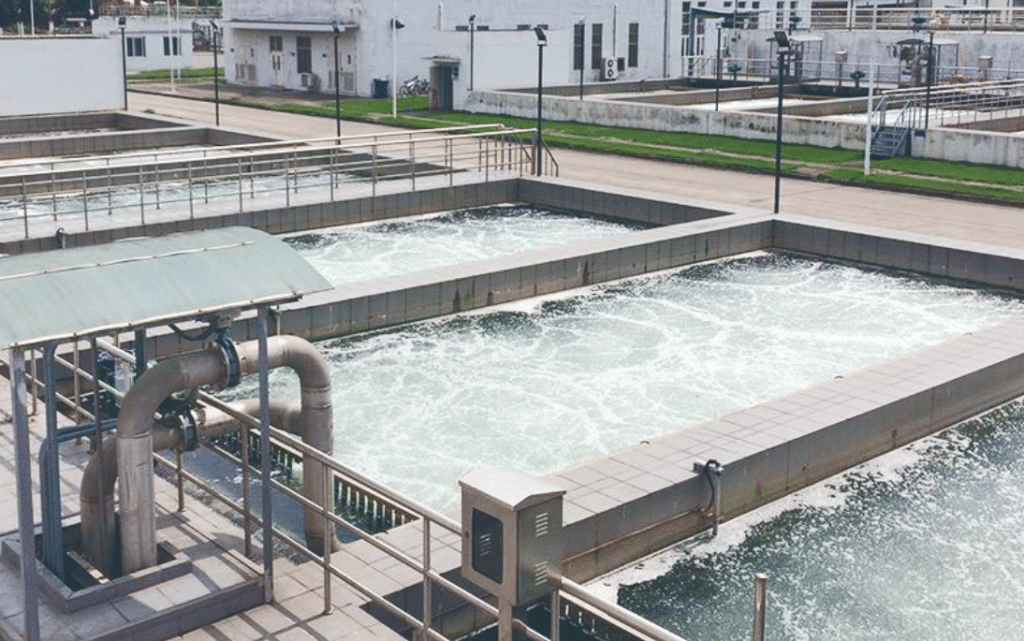
Explanation of Residual Chlorine
Residual chlorine in water treatment comes in three forms.
- Free – residual chlorine consisting of dissolved hypochlorite ions, hypochlorous acid and chlorine gas
- Combined – consists of chloramines that kill bacteria and oxidize organic matter
- Total – the sum of free and bound residual chlorine
Free, Combined, and Total Residual Chlorine Comparison
| Item | Free Residual Chlorine | Combined Residual Chlorine | Total Residual Chlorine |
| Definition | Chlorine remaining in water that has not reacted with ammonia or other nitrogen compounds. | Chlorine that has reacted with ammonia or nitrogen compounds to form chloramines. | The sum of free residual chlorine and combined residual chlorine. |
| Main Forms | Hypochlorous acid (HOCl) and hypochlorite ion (OCl⁻). | Mainly monochloramine, dichloramine, and trichloramine. | Includes both free chlorine and chloramines. |
| Disinfection Strength | Strong and fast-acting, especially in the form of HOCl. | Weaker and slower than free chlorine. | Represents the overall chlorine residual but does not indicate the proportion of each form. |
| Stability in Water | Less stable and consumed relatively quickly. | More stable and remains in water for longer periods. | Depends on the relative amounts of free and combined chlorine. |
| pH Influence | Strongly affected by pH because pH controls the HOCl/OCl⁻ ratio. | Also affected by pH, ammonia concentration, and chlorine-to-ammonia ratio. | Influenced by all factors affecting free and combined chlorine. |
| Typical Applications | Drinking water, swimming pools, food processing, and industrial water disinfection. | Drinking-water distribution systems requiring a longer-lasting disinfectant residual. | Wastewater, drinking water, and applications requiring overall chlorine monitoring. |
| Common Measurement Method | DPD free-chlorine test or a free-chlorine amperometric sensor. | Usually calculated by subtracting free chlorine from total chlorine. | DPD total-chlorine test or a total-chlorine analyzer. |
| Calculation | Measured directly. | Combined chlorine = Total chlorine − Free chlorine. | Total chlorine = Free chlorine + Combined chlorine. |
| Reporting Unit | Usually mg/L as Cl₂. | Usually mg/L as Cl₂. | Usually mg/L as Cl₂. |
Free residual chlorine provides faster and stronger disinfection, while combined residual chlorine is more stable but less powerful. Total residual chlorine indicates the overall chlorine remaining in water, but it cannot show how much is free chlorine or combined chlorine unless both parameters are measured separately.
Hypochlorous acid and other strong acids are used as oxidizing agents for disinfecting drinking water. However, these acids can also react as oxidizing agents, especially with lead, which increases the chance of lead corrosion. Therefore, water treatment and distribution plant operators must ensure that the right amount of residual chlorine is available when the water reaches the end of the system.
In different environments and situations, it is sometimes necessary to determine the residual chlorine level to prevent corrosion from occurring in the water. This level must be determined and carefully studied by the water plant to achieve safe and efficient water treatment and distribution.
The following is the report under the analysis of residual chlorine in drinking water samples.
| Chlorine, Combined | 0.03 mg/l |
| Chlorine, Free | 0.02 mg/l |
| Chlorine, Total | 0.03 mg/l |
Relationship Between Chlorine Dose, Chlorine Demand, and Chlorine Residual
The basic relationship among the three is:
Chlorine Dose = Chlorine Demand + Chlorine Residual
Chlorine dose is the total amount of chlorine actually added to water. After chlorine enters the water, it first reacts with organic matter, ammonia, ferrous ions, nitrite, sulfides, and other reducing substances. The portion of chlorine consumed by these reactions is called chlorine demand. The chlorine remaining in the water after a specified contact time is called chlorine residual. Therefore, chlorine demand can also be expressed as the chlorine dose minus the measured chlorine residual.
For example, if 2.0 mg/L of chlorine is added to water and the measured chlorine residual after the specified contact time is 0.6 mg/L, the chlorine demand of the water sample is 1.4 mg/L:
Chlorine Demand = 2.0 − 0.6 = 1.4 mg/L
The more organic matter, ammonia, and other oxidizable substances the water contains, the higher its chlorine demand will generally be. To achieve the target chlorine residual after the same contact time, a higher chlorine dose is required. When the water is relatively clean, chlorine demand is lower, and a smaller dose may be sufficient to maintain an adequate residual. WHO chlorination guidance also indicates that water with higher contaminant concentrations generally has a higher chlorine demand and therefore requires a higher chlorine dose.
It is important that calculations for all three parameters are based on the same sampling location and contact time. Chlorine continues to be consumed through reactions over time, so a residual measured immediately after dosing cannot be directly compared with a residual measured 30 minutes later or at the end of a distribution system. The EPA definition of chlorine demand also explicitly includes the condition of measurement after a specified contact time.
In water containing ammonia, the added chlorine initially forms chloramines, so the chlorine residual measured during the early stage may consist mainly of combined chlorine residual. As the chlorine dose continues to increase and reaches the breakpoint chlorination stage, the chloramines are further oxidized. Additional chlorine added after this point appears mainly as free chlorine residual. Therefore, practical process control should consider not only the residual concentration but also whether the measured parameter is free chlorine, combined chlorine, or total chlorine.
Role of Chlorine Residual in Drinking Water, Wastewater, Swimming Pools, and Cooling Water
| Application | Main Role of Chlorine Residual | Key Parameters to Monitor | Control Focus |
| Drinking water | Continuously suppress microbial regrowth and secondary contamination in the distribution network | Free chlorine residual or total chlorine residual | Maintain adequate disinfection throughout the network while avoiding overdosing and excessive disinfection by-product formation |
| Wastewater | Inactivate bacteria, viruses, and other pathogens before discharge or reuse | Total chlorine residual, and sometimes free chlorine residual | Provide sufficient disinfection contact time and control or remove excessive residual chlorine before discharge |
| Swimming pools | Rapidly inactivate pathogens introduced by swimmers | Free available chlorine, combined chlorine, and pH | Maintain sufficient free chlorine while preventing chloramine accumulation |
| Cooling water | Control bacteria, algae, biofilms, and microbiological fouling | Free chlorine residual or oxidizing biocide residual | Apply continuous or intermittent chlorination according to system load while avoiding corrosion and chemical overdosing |
DPD vs Membrane-Covered Amperometric vs Membraneless Constant-Potential Chlorine Measurement
DPD Colorimetric Method
The DPD method uses N,N-diethyl-p-phenylenediamine reagent, which reacts with chlorine to produce a colored compound. The analyzer determines chlorine concentration by measuring the intensity of the resulting color. Different reagent procedures can be used to measure free chlorine or total chlorine.
DPD is widely used as a reference method because it is well established and can provide reliable results when sampling, reagents, reaction time, and optical conditions are properly controlled. Automatic DPD analyzers can also provide online monitoring, although they normally operate through repeated measurement cycles rather than producing a truly continuous electrode signal. EPA Method 334.0 permits online chlorine analyzers, including DPD and amperometric instruments, for drinking-water monitoring when they are used with an approved grab-sample reference method.
The main disadvantage is the need to replenish reagents and maintain pumps, tubing, valves, and optical cells. Natural color, high turbidity, oxidizing substances, bubbles, or degraded reagents may also affect the result.
Membrane-Covered Amperometric Sensor
A membrane-covered amperometric sensor contains a working electrode, counter electrode, electrolyte, and selective membrane. Chlorine diffuses through the membrane and undergoes an electrochemical reaction at the electrode. The resulting current is correlated with chlorine concentration.
This method provides continuous, reagent-free measurements and responds quickly to changes in the disinfection process. It is therefore well suited to automatic chlorine dosing and process control. Commercial membrane amperometric systems commonly require controlled sample flow and periodic replacement of the membrane and electrolyte.
Many free-chlorine amperometric sensors respond primarily to hypochlorous acid. Because the proportion of HOCl and OCl⁻ changes with pH, pH measurement or compensation may be required, especially when sample pH varies.
Membraneless Constant-Potential Sensor
A membraneless constant-potential sensor is also an amperometric sensor, but its electrodes are exposed directly to the water. A stable electrical potential is maintained between the measuring and reference electrodes. Chlorine species react at the measuring electrode, producing a current related to the residual chlorine concentration.
Because it does not use a membrane, electrolyte, or chemical reagent, the sensor has a simple structure and relatively low consumable cost. It can provide fast, real-time measurements and is suitable for automated dosing systems, swimming pools, drinking-water processes, and circulating water systems.
However, direct contact between the electrodes and the sample means that scaling, biofilm, oils, suspended solids, and other oxidizing agents can affect the measurement. Stable flow and regular electrode cleaning are therefore important. Its signal can also change with pH, so field calibration or pH compensation may be necessary when water conditions vary.
Which Method Should You Choose?
Choose DPD when a recognized reference method, free-versus-total chlorine differentiation, or regulatory verification is the priority. Choose a membrane-covered amperometric sensor when continuous, reagent-free measurement and stable process control are required and periodic membrane maintenance is acceptable. Choose a membraneless constant-potential sensor when low consumable cost and simple maintenance are important, provided that the water quality, pH, flow, and electrode cleanliness can be adequately controlled.
In many installations, the most reliable strategy is to use an amperometric sensor for continuous process control and periodically verify it using a DPD measurement.
How to Choose Between Online and Portable Residual Chlorine Measurement
When Should Online Residual Chlorine Monitoring Be Used?
Online monitoring should be prioritized when changes in chlorine residual directly affect disinfection performance, product quality, or chemical-dosing control. Drinking-water plants may monitor chlorine residual at the treatment outlet and key distribution points. Swimming pools require continuous free-chlorine control, cooling-water systems adjust chlorination according to biological loading, and wastewater systems monitor disinfection performance and residual chlorine before discharge.
An online system continuously displays concentration changes and can provide high and low alarms, historical data, and automatic dosing control. When chlorine residual changes rapidly, relying only on one or two manual measurements per day may fail to identify underdosing, overdosing, or equipment failure promptly.
When Should Portable Residual Chlorine Testing Be Used?
Portable testing is suitable when there are many measurement locations, testing frequency is relatively low, or fixed installation is impractical. Typical applications include inspections at the ends of drinking-water distribution networks, checks of multiple storage tanks, maintenance of small pools, temporary project testing, and verification of online-analyzer readings.
Portable DPD chlorine meters can commonly measure both free chlorine and total chlorine. However, the result may be affected by sampling time, reagent quality, cuvette cleanliness, sample color, and operator technique. A consistent testing procedure is therefore essential.
Recommended Approach: Combine Online Monitoring with Portable Verification
For critical disinfection processes, the recommended approach is to combine online monitoring with portable testing. The online chlorine analyzer provides continuous process control, while the portable instrument is used to verify online readings, inspect additional locations, and support calibration.
This combined approach detects chlorine fluctuations quickly while reducing the risk of incorrect decisions caused by sensor drift, fouling, or reagent problems. Portable verification should be performed as close as possible to the online sensor, at approximately the same time and under the same water-quality conditions.
Effects of pH, Temperature, Flow, and Interfering Substances on Residual Chlorine Measurement
| Factor | Effect on Residual Chlorine Measurement | Recommended Control |
| pH | Changes the ratio of hypochlorous acid (HOCl) to hypochlorite ion (OCl⁻), affecting disinfection efficiency and sensor response | Measure pH simultaneously and apply pH compensation when required |
| Temperature | Affects chlorine decay, electrochemical reaction rates, sensor output, and response time | Use automatic temperature compensation and avoid sudden temperature changes |
| Sample Flow | Insufficient or unstable flow may cause slow, fluctuating, or falsely low readings | Maintain stable flow and pressure within the analyzer’s specified operating range |
| Sample Color and Turbidity | May interfere with the optical measurement of DPD colorimetric analyzers | Use sample pretreatment or an appropriate correction method when necessary |
| Other Oxidants | Ozone, chlorine dioxide, bromine, and permanganate may produce falsely high readings | Evaluate cross-sensitivity and select a sensor or reagent method with suitable selectivity |
| Metals and Reducing Substances | Iron, manganese, copper, nitrite, sulfides, and other substances may consume chlorine or interfere with measurement | Assess the water composition and verify results using a reference method |
| Oils and Surfactants | May coat the membrane or electrode surface, reducing sensitivity and slowing sensor response | Clean the sensor regularly and avoid unsuitable installation points |
| Scale, Biofilm, and Suspended Solids | Can foul membranes, electrodes, tubing, and flow cells, causing drift or unstable readings | Use appropriate filtration, automatic cleaning, and routine maintenance |
| Air Bubbles | May interrupt contact between the sample and the sensing surface or interfere with optical readings | Install the flow cell correctly and remove trapped air from the sampling line |
Apure Residual Chlorine Monitoring Solutions
Apure provides residual chlorine meters, sensors, and online monitoring solutions for drinking water, swimming pools, cooling water, food processing, and industrial water-treatment applications. The available solutions include reagent-free free-chlorine analyzers, reagent-based free or total chlorine analyzers, and online electrochemical sensors for continuous process monitoring.
For continuous residual chlorine control, the Apure KCL Pool Residual Free Chlorine Sensor supports real-time measurement, automatic temperature compensation, 4–20 mA output, and optional RS485 Modbus communication. Its measurement range is 0–20.00 mg/L, making it suitable for swimming pools, water-treatment systems, and automatic chemical-dosing applications.
Explore Apure chlorine monitoring products:
- Apure Chlorine Meters and Sensors
- KCL Online Residual Free Chlorine Sensor
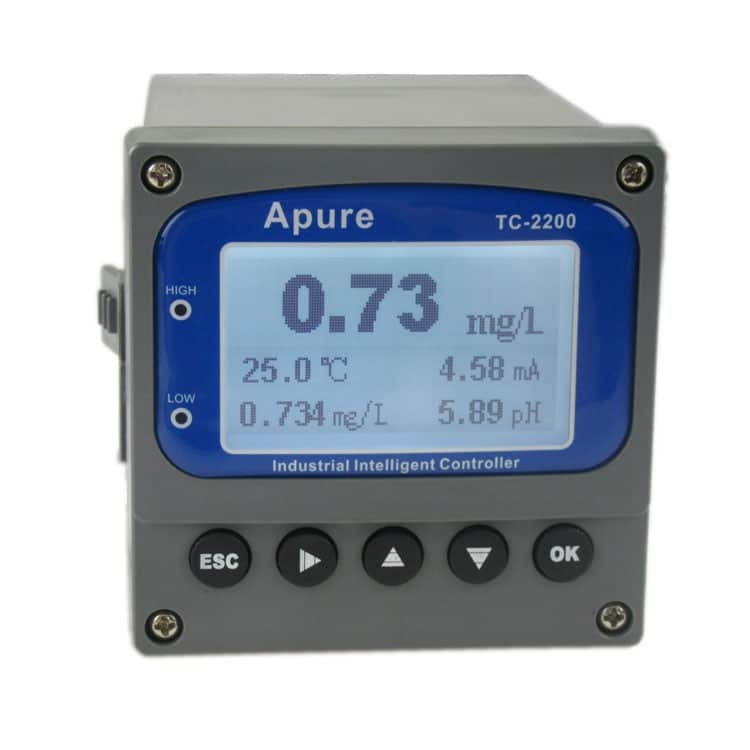
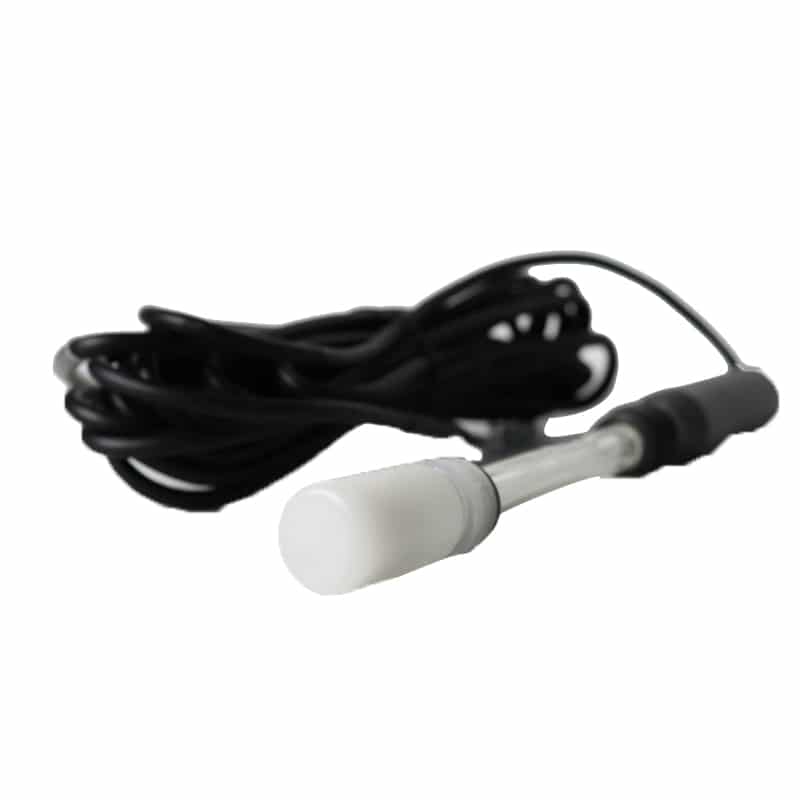
Apure can also provide integrated monitoring systems that combine residual chlorine, pH, ORP, turbidity, and temperature measurement with data transmission, alarms, and automatic dosing control.
Contact Apure to select the appropriate residual chlorine analyzer according to the chlorine parameter, measuring range, water quality, communication output, and process-control requirements.
FAQ
More articles on water quality parameters:
What is salinity?
What is dissolved oxygen?
What is pH in water test?
What is a pressure transmitter?